
Quick Answer
Kilim rugs dubai are flat-woven, reversible textiles with bold geometric patterns, ideal for casual and bohemian interiors. Jute carpets dubai are natural-fiber, eco-friendly floor coverings suited to relaxed, textured spaces but less resistant to moisture. Persian carpets dubai are dense, hand-knotted pieces prized for durability, intricate motifs, and long-term value. Risala Furniture and Interiors LLC sources and supplies all three styles for homes and hospitality projects across Dubai.
Key Facts Table
| Rug Type | Weaving Method | Pile Height | Best Placement |
| Kilim Rugs | Flat-woven, no pile | Flat | Casual living rooms, hallways |
| Jute Carpets | Natural fiber weave | Low-medium | Bedrooms, low-traffic dry areas |
| Persian Carpets | Hand-knotted | Medium-high | Formal living rooms, majlis |
Introduction
Rugs and carpets do more than cover a floor — they set the tone of a room. In Dubai, three styles dominate residential and hospitality interiors: kilim rugs for their bold, flat-woven character; jute carpets for their natural, earthy texture; and Persian carpets for their craftsmanship and heritage value. Understanding how each is made, and where each performs best, helps you avoid a costly mismatch between style and function.
Kilim Rugs: Flat-Woven, Bold, and Versatile
Kilim rugs are produced using a flat tapestry-weaving technique, without knots or pile, which makes them thinner, lighter, and reversible compared to knotted rugs. Traditionally woven across Anatolia, Persia, and the Caucasus, kilims are recognized for geometric patterns and vibrant natural dye colors.
Why kilim rugs work well in Dubai interiors:
- Lightweight, easy to reposition or layer over other flooring
- Reversible design extends usable life
- Complements both modern minimalist and bohemian interior styles
- Generally more budget-friendly than hand-knotted pile carpets
Practical tip: Because kilims have no pile, they show less wear from foot traffic in hallways but offer less cushioning than knotted rugs — pair with an underlay if used in a heavily walked area.
Jute Carpets: Natural, Sustainable, and Textural
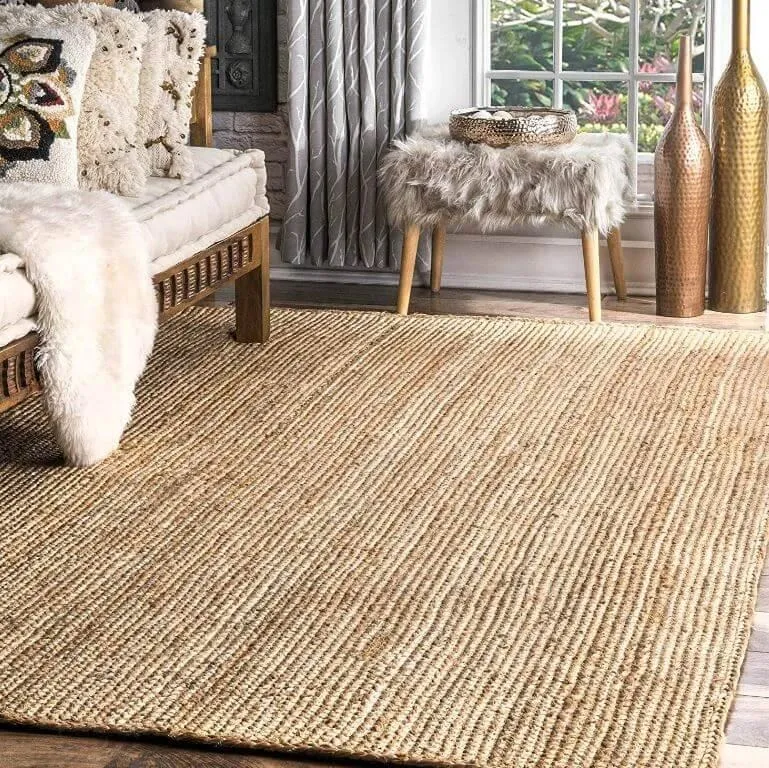
Jute is a natural plant fiber, biodegradable and renewable, spun into yarn and woven into carpets with a distinctive coarse, earthy texture. Jute carpets have grown in popularity in Dubai among homeowners seeking sustainable, chemical-free interior materials.
Considerations for jute carpets in a UAE home:
- Best suited to dry, air-conditioned indoor spaces — jute can absorb moisture and is prone to staining in humid or spill-prone areas
- Adds warmth and texture to minimalist or neutral-toned interiors
- Not recommended for kitchens, bathrooms, or outdoor-adjacent areas
- Requires immediate blotting (not rubbing) for spills to prevent fiber damage
Persian Carpets: Craftsmanship That Lasts Generations
Persian carpets are hand-knotted using wool, silk, or wool-silk blends, with knot density directly influencing durability and detail. Carpets from recognized weaving regions such as Tabriz, Qom, and Isfahan are known for tighter knot counts and finer motifs, which is one reason they are often treated as long-term investment pieces rather than disposable décor.
What affects Persian carpet value:
- Knot density (knots per square inch)
- Material — silk generally commands a premium over wool
- Natural vs synthetic dyes
- Age and provenance, particularly for antique pieces
Practical tip: Ask for the carpet’s origin and material composition in writing, and inspect the underside — a well-made hand-knotted carpet should show a clean, even knot pattern without glued backing.
Kilim Rugs vs Jute Carpets vs Persian Carpets: Comparison Table
| Factor | Kilim Rugs | Jute Carpets | Persian Carpets |
| Cost | Low–Medium | Low | Medium–High |
| Durability | High (flat weave) | Medium | Very High |
| Moisture Resistance | Medium | Low | Low–Medium |
| Style | Geometric, bold | Natural, textured | Ornate, traditional |
| Investment Value | Low | Low | High (hand-knotted pieces) |
Actionable Tips Before You Buy
- Match rug style to room function first, aesthetics second — a jute carpet in a high-spill area will wear out quickly regardless of how it looks.
- Use rug pads under kilim and Persian rugs on marble or tile to prevent slipping and surface scratching.
- Rotate rugs periodically to distribute sun exposure evenly.
- For Persian carpets, request professional cleaning rather than DIY washing to preserve dye integrity.
- Ask your supplier, such as Risala Furniture and Interiors LLC, about custom sizing for irregular room layouts.
Frequently Asked Questions
1. What is the main difference between a kilim and a Persian carpet? Kilims are flat-woven with no pile, while Persian carpets are hand-knotted, creating a raised pile and generally higher durability and detail.
2. Are jute carpets suitable for Dubai’s humidity? Jute performs best in dry, air-conditioned interiors; it is not recommended for humid or moisture-prone areas.
3. Can kilim rugs be used outdoors? Only in covered, shaded outdoor areas — prolonged sun and moisture exposure will fade and degrade natural fibers.
4. How do I clean a Persian carpet safely? Vacuum regularly on a low setting and have it professionally cleaned every 12–18 months to preserve dyes and knotting.
5. Are jute carpets eco-friendly? Yes, jute is a biodegradable, renewable natural fiber, making it one of the more sustainable floor covering options.
6. Do kilim rugs fade in sunlight? Yes, natural-dye kilims can fade with prolonged direct sun exposure; rotating the rug helps distribute wear evenly.
7. What makes a Persian carpet valuable? Knot density, material quality (wool vs silk), dye type, and weaving region all influence value.
8. Can I layer a kilim rug over wall-to-wall carpet? Yes, this is a common styling technique to define a seating area while retaining cushioning underfoot.
9. Is jute carpet safe for homes with pets? Jute is durable against light scratching but can be difficult to fully clean after pet accidents due to fiber absorption.
10. Where does Risala Furniture and Interiors provide its services? Risala Furniture and Interiors LLC provides its services in UAE ,OMAN , QATAR , SAUDI ARABIA , KUWAIT , BAHRAIN and all across the Gulf and Middle East region.
Key Takeaways
- Kilim rugs offer bold pattern and versatility at a lower cost.
- Jute carpets bring natural texture but need dry, low-spill environments.
- Persian carpets remain the premium, long-term investment choice.
- Rug pads and rotation extend the life of any rug type.
- Risala Furniture and Interiors LLC supplies all three categories with sourcing support across Dubai.
Conclusion
Kilim, jute, and Persian carpets each bring something different to a Dubai interior — casual versatility, natural texture, or heirloom-quality craftsmanship. The right pick depends on the room’s traffic, humidity exposure, and how long you want the piece to last. Risala Furniture and Interiors LLC can help you compare samples and select rugs suited to your space and budget.
📍 Visit us: maps.app.goo.gl/igmNHkW1QCyL19wT7?g_st=ac
