
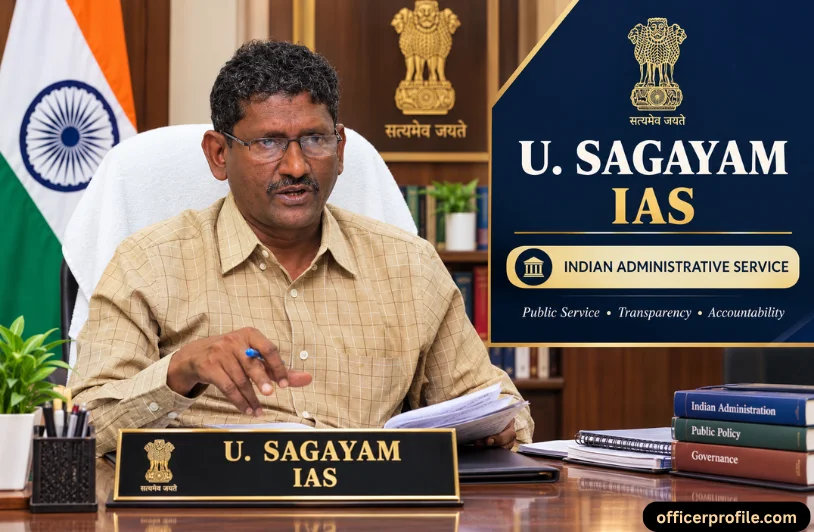
Sagayam IAS (full name: Ubagarampillai Sagayam) is a retired IAS officer from Tamil Nadu, born on 22 March 1964 in Pudukkottai. Transferred 26 times in 30 years for refusing to compromise, he is best known for exposing a Rs. 1,11,000 crore granite mining scam in Madurai and being the first IAS officer in Tamil Nadu to publicly disclose his personal assets. He retired voluntarily in January 2021 and leads the Makkal Pathai social reform trust. As of July 2026, the Madras High Court ordered police protection for him as the granite mining trial remains active.
Quick Information About Sagayam IAS
| Detail | Information |
|---|---|
| Full Name | Ubagarampillai Sagayam |
| Also Known As | U. Sagayam, Sagayam IAS, IAS Sagayam |
| Profession | Retired IAS Officer, Social Activist |
| Date of Birth | 22 March 1964 |
| Age (as of 2026) | 62 Years |
| Birth Place | Perunchunai Village, Pudukkottai, Tamil Nadu |
| Nationality | Indian |
| Religion | Christianity |
| Education | M.A. (Social Work), B.L. (Law) |
| IAS Batch | 2001 (Promoted via Tamil Nadu Civil Service) |
| Cadre | Tamil Nadu |
| Service Duration | ~30 years (1991–2021) |
| Number of Transfers | 26 times in 30 years |
| Father’s Name | Not officially confirmed (farmer from Pudukkottai) |
| Mother’s Name | Not officially confirmed |
| Wife | Vimala Sagayam |
| Son | Arun Sagayam |
| Daughter | Yalini Sagayam |
| Caste | Not officially confirmed |
| Native Place | Perunchunai, Pudukkottai District, Tamil Nadu |
| Personal Motto | Lanjam thavirthu, nenjam nimirthu (Reject bribes, hold your head high) |
| Known For | Granite scam, anti-corruption, transparent governance |
| Retirement Date | January 2021 (voluntary) |
What makes a civil servant truly great? Is it the years they serve or the courage they bring to every posting? For Ubagarampillai Sagayam, widely known as Sagayam IAS, the answer lies in a lifetime of honest choices made under pressure.
In nearly three decades of service, he was transferred more than 26 times. Every transfer came because he refused to bend. He took on the sand mafia, sealed a Pepsi bottling plant, exposed a granite scam worth over ₹1,11,000 crore, and once spent an entire night in a cemetery to protect forensic evidence from tampering. Even after retiring in 2021, the fight continues. In July 2026, the Madras High Court had to order armed police protection for him because the granite mining trial is still active and threats to his life persisted.
He is not a fictional hero. Sagayam IAS is a retired Indian Administrative Service officer from Tamil Nadu who proved that integrity, not influence, is the most powerful tool a public servant can carry.
Sagayam IAS Age, Early Life and Education
Childhood and Family Background
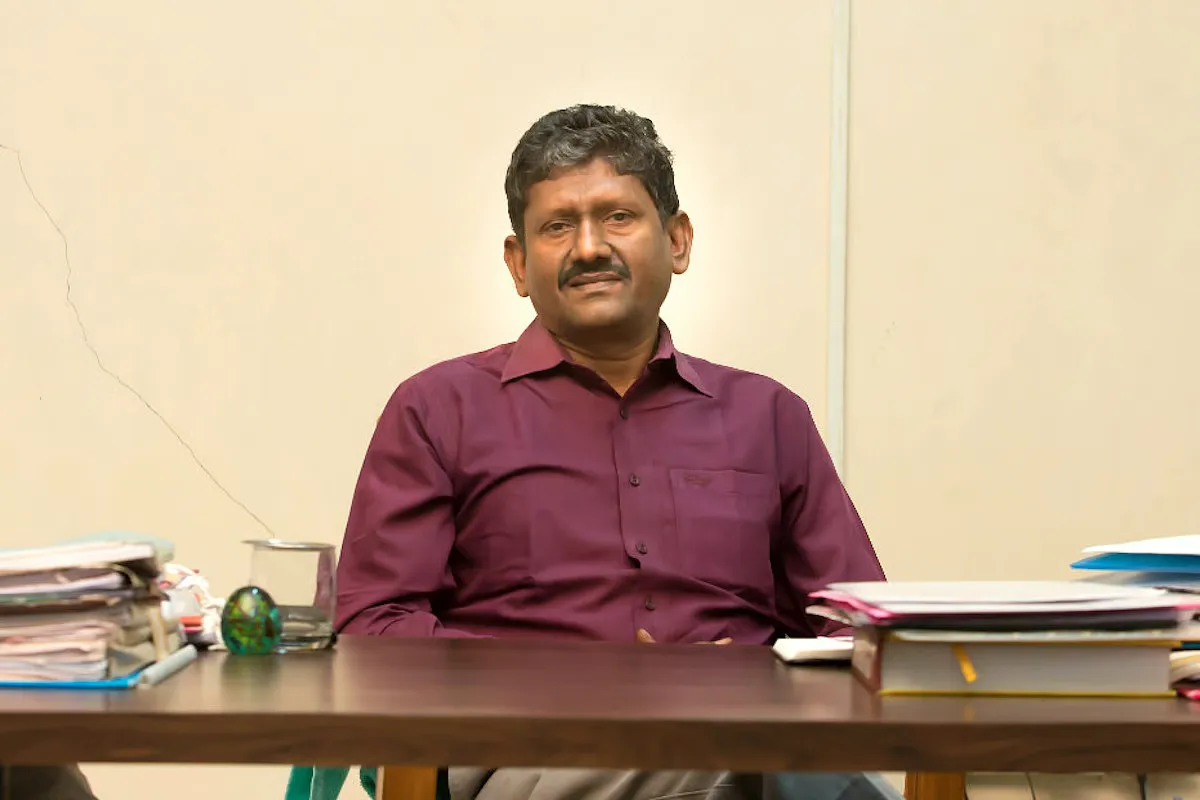
Sagayam IAS was born on 22 March 1964 in Perunchunai, a small village near Pudukkottai in Tamil Nadu. He is the youngest of five sons in a humble farming family. His upbringing was grounded in agricultural life, close to the land and far from privilege.
Those who know him well often point to his mother as the origin of his moral backbone. She reportedly instilled a strong code of honesty in him from a young age. That early value system never wavered, not through 26 transfers, not through death threats, not through a career that repeatedly pitted him against the most powerful people in Tamil Nadu.
Growing up in rural Tamil Nadu gave Sagayam a direct understanding of how the system could fail ordinary people. That understanding became the driving force behind every decision he took as an officer.
School Education
Sagayam studied entirely in the Tamil medium. He attended a panchayat elementary school in his village and later completed higher secondary education at a government school in Ellaippatti. The fact that he pursued a national-level career through Tamil-medium schooling makes his journey all the more remarkable, and deeply relatable to first-generation government exam aspirants across Tamil Nadu.
Higher Education
For college, Sagayam pursued two postgraduate qualifications. He earned a Master of Arts (M.A.) in Social Work and a Bachelor of Laws (B.L.). His academic focus on social work gave him a people-first lens that would define his entire governance philosophy.
Education Summary Table
| Level | Details |
|---|---|
| Primary Education | Tamil-medium Panchayat Elementary School, Perunchunai |
| Higher Secondary | Government Higher Secondary School, Ellaippatti |
| Undergraduate | Not officially confirmed |
| Postgraduate | M.A. (Social Work) |
| Law Degree | B.L. (Bachelor of Laws) |
| Civil Service Entry | Central Secretariat Service (1989) via UPSC; then TNPSC Group I (1991) |
| IAS Promotion Year | 2001 Batch (via State Civil Service quota) |
How Sagayam Joined the Civil Services: A Rare Path
Sagayam’s entry into public service was unusual and speaks volumes about his character.
In 1989, he cleared the Union Public Service Commission (UPSC) Civil Services Examination and joined the Central Secretariat Service in New Delhi. After training and seven months of work at the Centre, Sagayam voluntarily resigned. A Central Government posting in Delhi was not what he had in mind. He wanted to work directly on the ground in Tamil Nadu.
He returned, sat for the Tamil Nadu Public Service Commission (TNPSC) Group I exam, cleared it, and joined the Tamil Nadu State Civil Service (TNCS) as a Deputy Collector.
After earning seniority and a strong service record, he was promoted to the Indian Administrative Service (IAS) in the 2001 batch through the State Civil Service quota. His IAS career officially began in 2001, though his public service in Tamil Nadu had started a full decade earlier in 1991.
He began his state-level career as a Sub-Divisional Magistrate in Ootacamund (Ooty) and the clashes with power started almost immediately.
Sagayam IAS Career: A Full Timeline
Complete Career History Table
| Year | Posting / Role | Notable Action |
|---|---|---|
| 1989 | Central Secretariat Service, New Delhi | Resigned after 7 months to serve Tamil Nadu |
| 1991 | Sub-Divisional Magistrate, Ootacamund | Questioned favouritism toward large tea estate owners; transferred |
| 2000 | Additional District Magistrate, Kanchipuram | Sealed Pepsi bottling plant; halted illegal Palar river sand mining |
| 2004 | Deputy Commissioner of Civil Supplies, Chennai | Seized 5,000 illegally used subsidised LPG cylinders |
| 2009 | District Collector, Namakkal | First IAS officer in TN to publish personal assets publicly |
| 2011 | District Collector, Madurai (Election duty) | Cracked down on voter bribery; commended by Chief Election Commissioner |
| 2011–2012 | District Collector, Madurai | Summoned MK Alagiri over illegal irrigation canal destruction |
| 2012 | District Collector, Madurai | Filed granite scam report (₹16,000 crore+); transferred 4 days later |
| 2012–2014 | Managing Director, Co-optex, Chennai | Continued filing complaints; faced two transfers in two days in Sep 2014 |
| 2014 | Indian Medicine & Homeopathy Commissioner | Transferred within days |
| 2014–2020 | Vice Chairman, Science City, Chennai | Appointed by Madras HC as Special Officer for mining probe |
| 2015 | Special Officer (Court-appointed) | Submitted 600-page report to HC: ₹1,11,000 crore loss |
| 2020 | Applied for voluntary retirement (October 2) | Frustrated by COVID sidelining; applied 3 years before superannuation |
| 2021 | Retired from IAS (January) | TN government formally accepted resignation |
The Kanchipuram Phase (2000): Sand Mafia and Pepsi
By 2000, Sagayam was posted as Additional District Magistrate in Kanchipuram. A citizen complaint about Pepsi bottles containing visible dirt prompted him to act. He personally verified the issue and sealed the Pepsi bottling plant. Given the scale of the company and political connections in the bottling industry, this took considerable courage.
During the same posting, he confronted the “sand mafia” — operators engaged in illegal dredging from the Palar river bed, which caused erosion and flooding. Sagayam halted all dredging operations. He refused to lift the order even after receiving direct threats of physical violence. Ultimately, political pressure led to his transfer, the first of many..
The Gas Cylinder Crackdown (2004)
In Chennai in 2004, working as Deputy Commissioner of Civil Supplies, Sagayam discovered that subsidised domestic LPG cylinders were being diverted and illegally used by restaurants. He confiscated 5,000 such cylinders in one enforcement drive.
Namakkal District Collector: A Historic Transparency Move (2009)
In 2009, as District Collector of Namakkal, Sagayam made history. He voluntarily uploaded his complete personal financial details to the district’s official website, becoming the first IAS officer in Tamil Nadu to do so.
His disclosed assets: a bank balance of just ₹7,172 and a house in Madurai jointly owned with his wife, valued at approximately ₹9 lakh. This transparency act made national news and became a benchmark in accountability for Indian civil servants.
He also used the Namakkal posting to reform the Village Administrative Officer (VAO) system. He ordered VAOs living in cities to return to the villages they administered. When local politicians tried to have him transferred, more than 5,000 villagers protested in his support. The transfer was withdrawn, a rare public victory for an officer over political machinery.
Madurai Elections: Stopping Voter Bribery (2011)
The Election Commission of India personally selected Sagayam to serve as District Collector of Madurai for the 2011 Tamil Nadu Legislative Assembly elections. Madurai was notorious for voter bribery, and the ECI needed an officer with an unblemished record.
Sagayam reached Madurai 20 days before voting day. He launched voter education drives, urged citizens to refuse bribes, and set up intensive monitoring. He confiscated ₹20 lakh intended for direct distribution to voters. After the election, considered one of the cleanest in the constituency’s recent history India’s Chief Election Commissioner publicly commended Sagayam for his work.
The MK Alagiri Confrontation (2011)
In September 2011, Sagayam issued a formal summons to MK Alagiri, the son of late DMK patriarch M Karunanidhi and then a Union Cabinet minister, along with his wife and son. The issue: the family had allegedly destroyed irrigation canals used by hundreds of farmers in constructing a private engineering college near Madurai. Sagayam forced Alagiri to appear before a court to explain why action should not be taken. That was the kind of move that earned him the nickname “Tamil Nadu’s Khemka.”
The Granite Scam: Sagayam’s Defining Chapter
The Scam Exposed (2012)
In May 2012, Sagayam IAS launched an investigation into illegal granite quarrying around Madurai. The issue had first surfaced in 2008 through an RTI activist. A Madras High Court inquiry had been ordered in 2009 but stalled. Tamil-language newspaper Dina Bhoomi broke the story in 2010, only for its editor and the RTI activist to face arrest on unrelated charges.
Sagayam’s investigation led to a bombshell report accusing several senior officials of colluding with granite mining interests. His initial estimate: state losses of at least ₹16,000 crore, possibly double. Four days after submitting the report, he was transferred to Co-optex, a handloom weavers’ cooperative in Chennai. The message was clear. But it did not stick.
The Report Leaked, Arrests Begin (2012–2013)
When Sagayam’s report was leaked to the press in August 2012, public outrage compelled the government to pursue the matter. Raids were conducted on the film production house of Durai Dayanidhi, son of Union Fertiliser Minister MK Alagiri. Several officials were investigated. Two former Madurai district collectors came under scrutiny. Major granite exporter PR Palanisamy of PRP Granites was arrested.
However, momentum stalled again in mid-2013 when Sagayam’s successor as Madurai collector, Anshul Mishra, was himself transferred.
Madras High Court Takes Over (2014)
A citizen petition in July 2014 asked the Madras High Court to rekindle the inquiry. The court responded by appointing Sagayam as Special Officer-cum-Legal Commissioner, tasked with investigating all mining operations across Tamil Nadu.
The AIADMK government resisted at every step. It approached the Supreme Court to cancel the HC direction. The Supreme Court dismissed the appeal. The HC then fined the state government ₹10,000 for delaying Sagayam’s appointment.
The 600-Page Report and ₹1,11,000 Crore Finding (2015)
On 23 November 2015, Sagayam submitted a 600-page report to the Madras High Court, accompanied by hundreds of pages of supporting documents. His revised estimate: illegal mining had caused a loss of over ₹1,11,000 crore to the state exchequer over many years.
The Federation of Indian Granite and Stone Industry challenged the figure, pointing out that India’s total granite exports over 17 years amounted to only ₹52,000 crore. The court continued to pursue the matter despite contestation.
The Cemetery Night (12 September 2015)
During the investigation, Sagayam came across bodies believed to be victims of human sacrifice allegedly carried out by quarry operators. When local police were slow to exhume the remains (raising suspicion of tampering), Sagayam personally spent the entire night of 12 September 2015 in the graveyard.
A photograph of him sleeping on a cot at the cemetery site went viral across Tamil Nadu. It became one of the most powerful images of honest governance in modern Indian civil service history.
Granite Scam: Key Data Table
| Element | Verified Data |
|---|---|
| Initial loss estimate (2012 report) | ₹16,000 crore (possibly ₹32,000 crore) |
| Final HC report loss estimate (2015) | ₹1,11,000 crore |
| Report size | 600 pages + hundreds of pages of supporting documents |
| High Court fine on TN government | ₹10,000 for delaying Sagayam’s appointment |
| Key person arrested | Durai Dayanidhi (son of MK Alagiri); PR Palanisamy (PRP Granites) |
| HC-appointed role | Special Officer-cum-Legal Commissioner |
| Security ordered | 2014 onwards; withdrawn December 2023; restored by HC order July 2026 |
| Case status (2026) | Trial ongoing before Special Court, Madurai |
Life After Retirement: What Sagayam IAS Is Doing Now
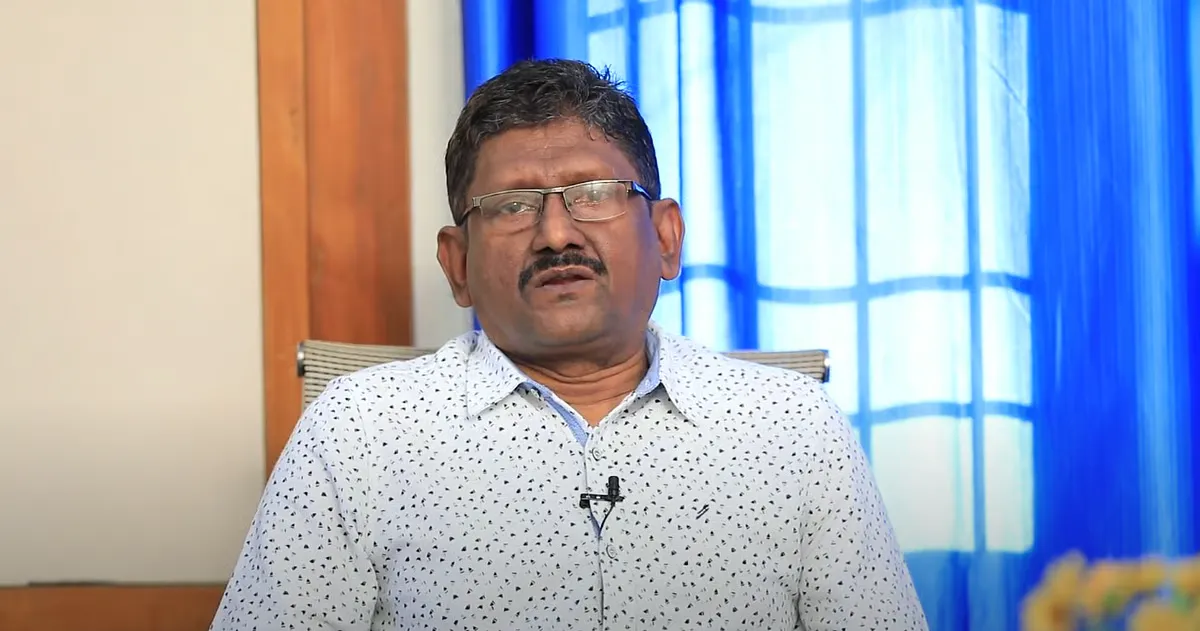
Voluntary Retirement (2021)
Sagayam applied for voluntary retirement on 2 October 2020, three years before his natural superannuation date. At the time, he was Vice Chairman of Science City, Chennai. A source close to him revealed that he was deeply frustrated: he had hoped to be assigned to COVID-19 management committees but the government kept him out.
The Tamil Nadu government formally accepted his resignation in January 2021.
Makkal Pathai Trust
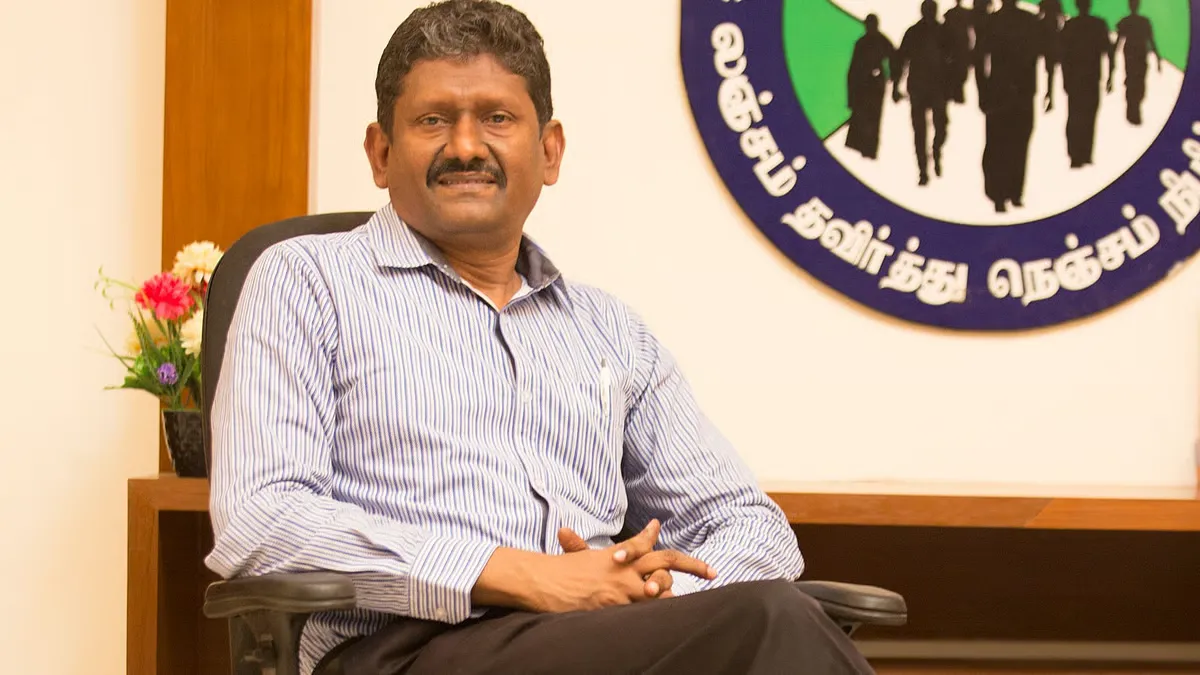
Even before retirement, Sagayam had been running Makkal Pathai (People’s Path), a social reform trust he founded. The trust included several other retired IAS officers and focused on civic education, anti-corruption awareness, and community-level public engagement.
Political Entry (2021)
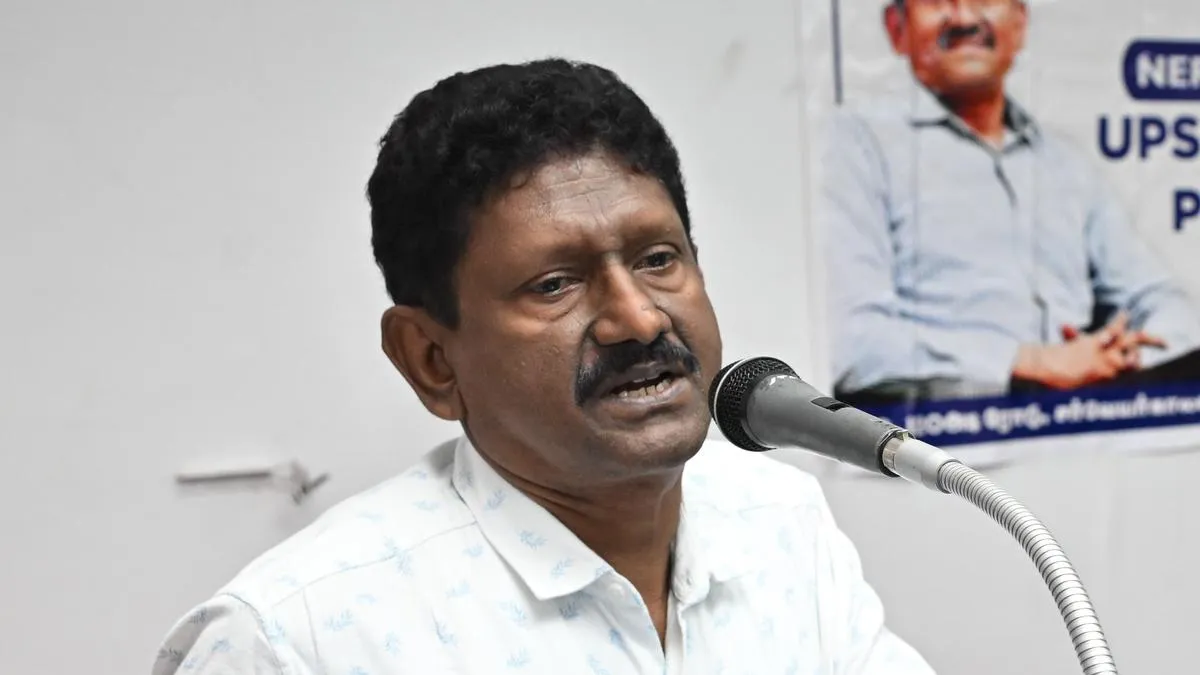
In February 2021, exactly four months after his voluntary retirement, Sagayam confirmed his entry into active politics at a public meeting in Adambakkam, Chennai, before hundreds of supporters. He urged followers to overcome caste and religious barriers in politics and avoid hero worship. He drew inspiration from former Tamil Nadu leaders K. Kamaraj, C.N. Annadurai, and the minister Kakkan.
He did not announce any specific party affiliation at the time. Whether he has since formally joined any political party including TVK (Tamilaga Vettri Kazhagam) is not officially confirmed as of October 2026.
2024–2026: The Granite Trial Continues
The granite mining trial moved to a Special Court in Madurai that handles Mines and Minerals Act violations. In 2025, Sagayam was summoned to appear and depose as a key witness. He declined to appear in person due to safety concerns after his security was removed.
In a letter to the Special Public Prosecutor dated March 25, he stated he could not comply with the summons without police protection. The Special Court directed him to depose via video conference instead.
July 2026: Madras HC Orders Police Protection Again
On 27 July 2026, the Madras High Court (Justice GK Ilanthiraiyan) directed the Tamil Nadu Director General of Police to provide at least one armed gunman to Sagayam every time he appears before the trial court as a witness.
The court observed: “His evidence is vital for the trial.”
The backstory: Sagayam had been granted police protection in 2014 when the HC recognised death threats against him. That protection was withdrawn by the state government in December 2023 without prior court approval. After he was unable to safely appear before the trial court to depose, he filed a petition. The July 2026 HC order restored protection for court appearances.
This makes Sagayam’s fight against the granite mafia an active, ongoing legal battle, one that continues 14 years after he first filed his report.
Family Details
Sagayam IAS comes from a farming family in Perunchunai village, Pudukkottai one of Tamil Nadu’s more rural districts. He is the youngest of five brothers. His upbringing in a low-income agricultural household gave him an instinctive connection to the ordinary citizen.
Family Information Table
| Member | Details |
|---|---|
| Father | Name not officially confirmed; farmer from Perunchunai, Pudukkottai |
| Mother | Name not officially confirmed; credited by Sagayam as the source of his honesty |
| Brothers | Four elder brothers (youngest of five sons) |
| Wife | Vimala Sagayam |
| Son | Arun Sagayam |
| Daughter | Yalini Sagayam |
| Family property | House in Madurai, jointly owned with wife; valued at ₹9 lakh (as disclosed in 2009) |
Sagayam has consistently kept his family away from the public spotlight. His 2009 asset disclosure, which listed a bank balance of just ₹7,172 after years of service remains one of the most powerful statements of financial integrity by any IAS officer in India.
Sagayam IAS and the UPSC / IAS Aspirant Connection
Sagayam’s story is widely read and discussed in IAS coaching circles across India. Several things stand out for aspirants:
- He did not crack the IAS directly. He entered through TNPSC Group I and was promoted to IAS via the State Civil Service quota, a reminder that the civil services have multiple entry paths.
- He completed his education entirely in Tamil medium — proof that language of instruction does not limit ambition.
- His career demonstrates that field postings (district-level work as a collector, SDM, or ADM) are where the real impact happens.
- His decision to resign from a Central Government post to serve his home state is cited by civil service mentors as an example of mission-driven career choices.
Awards & Achievements
Sagayam IAS has not received formal civilian awards from the Government of India. His recognition has come through judicial appreciation, national media coverage, and the enduring trust of ordinary citizens.
Key Recognitions Table
| Recognition | Details |
|---|---|
| Commendation by Chief Election Commissioner | For conducting free and fair 2011 Madurai elections |
| Court-appointed Special Officer | Madras High Court (September 2014) to probe all TN mining violations |
| First TN IAS to disclose assets publicly | Uploaded financials on district website (2009) |
| People’s Collector | Dubbed so by national press; called “the common man’s collector” |
| “Tamil Nadu’s Khemka” | Hindustan Times comparison to Ashok Khemka, iconic honest IAS officer of Haryana |
| 5,000 villager protest in his support | Namakkal villagers opposed his transfer publicly, rare in Indian governance history |
| Makkal Pathai Trust | Founded to drive civic and social reform post-service |
Interesting Facts About Sagayam IAS
- Sagayam voluntarily gave up a prestigious Central Government post in New Delhi after just seven months, turning down security and status to serve Tamil Nadu at the ground level.
- His office door always carried a Tamil sign: “Lanjam thavirthu, nenjam nimirthu” meaning “Reject bribes, hold your head high.” He had it in every posting he held.
- He was transferred 26 times across 30 years of service. Almost every transfer followed an action against powerful political or business interests.
- In 2009, he became the first IAS officer in Tamil Nadu to voluntarily publish personal financial assets online. His bank balance at the time: ₹7,172.
- On the night of 12 September 2015, Sagayam slept in a cemetery in Madurai district to prevent tampering with evidence of alleged human sacrifice by quarry operators. The viral photograph of him on a cot in the graveyard circulated across India.
- The Madras High Court fined the Tamil Nadu government ₹10,000 for deliberately delaying Sagayam’s appointment as Special Officer in the granite mining case.
- His 600-page final report to the High Court estimated state losses from illegal granite mining at over ₹1,11,000 crore, one of the largest public exchequer loss estimates in any single district-level probe in India.
- Over 5,000 villagers took to the streets in Namakkal to oppose his transfer, one of the most visible shows of public support for a sitting IAS officer in Tamil Nadu.
- Even after retirement, he continues to be a key witness in active criminal proceedings. In July 2026, the Madras High Court ordered armed police protection for him to appear in court because threats to his life persisted years after he left service.
- He has openly told his supporters to reject caste and religion in politics, a message he practised in his own career by treating every citizen equally across castes, communities, and economic backgrounds.
Read More:
- Athar Aamir Khan IAS
- Vinay Tiwari IPS
- Awanish Kumar Sharan IAS
- Divya Mittal IAS
- Saloni Verma IAS
- Sanjay Prasad IAS
- Saloni Verma IAS
- Surabhi Gautam IAS
- Arjun Gowda IAS
- Durga Shakti Nagpal
- Nalin Prabhat IPS
- Charu Nigam IPS
- IAS Santosh Verma
Frequently Asked Questions (FAQ)
1. Who is Sagayam IAS?
Sagayam IAS (full name: Ubagarampillai Sagayam) is a retired IAS officer from the Tamil Nadu cadre (2001 batch). He is one of India’s most celebrated anti-corruption officers, known for exposing the Madurai granite mining scam, conducting fair elections in 2011, and being the first Tamil Nadu IAS officer to publicly disclose personal assets.
2. What is Sagayam IAS’s age in 2026?
Sagayam IAS was born on 22 March 1964. As of October 2026, he is 62 years old.
3. What is Sagayam IAS’s native place?
He was born and raised in Perunchunai village, near Pudukkottai in Tamil Nadu.
4. Who is Sagayam IAS’s wife and children?
His wife is Vimala Sagayam. He has two children: a son named Arun Sagayam and a daughter named Yalini Sagayam.
5. What is Sagayam IAS’s current posting?
Sagayam IAS retired voluntarily in January 2021. He now runs the Makkal Pathai social reform trust and serves as a key witness in the ongoing granite mining trial in Madurai.
6. What is the Sagayam IAS granite scam?
It refers to the investigation Sagayam led into illegal granite quarrying around Madurai. His 2012 report estimated state losses at ₹16,000 crore. His final 600-page report to the Madras High Court in 2015 placed the figure at over ₹1,11,000 crore. The trial is still ongoing as of 2026.
7. Has Sagayam IAS joined TVK or any political party?
Sagayam confirmed his intention to enter politics in February 2021. However, his formal membership in any political party including TVK (Tamilaga Vettri Kazhagam) is not officially confirmed as of October 2026.
For More Verified Officers Info, Refer To This Trusted Source: Officer Life Path
