
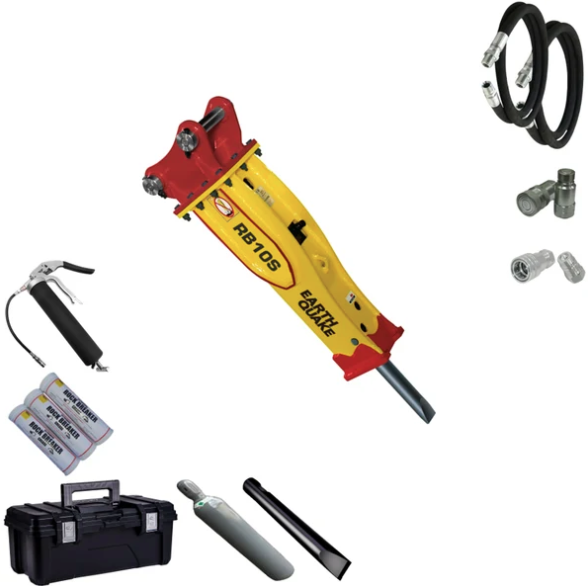
When construction workers come upon solid rock, reinforced concrete, or highly compacted dirt, excavation operations become much more challenging. These materials may be difficult for standard digging equipment to penetrate, which might result in slower progress, more equipment wear, and unanticipated project delays. Machinery that can handle challenging ground conditions without sacrificing operating efficiency is essential for contractors working on foundations, road building, and site preparation. Because it enables operators to break down difficult materials into manageable parts before removal, hydraulic breaking equipment has become an essential component of contemporary excavation.
Recognising Rock Breakers’ Function In Excavation
The main purposes of excavators are material movement, lifting, and excavation. Their typical buckets, however, aren’t always appropriate for penetrating hard surfaces. Rock breakers are very helpful at this point. By using a hardened steel tool to provide repeated impact pressures, these hydraulic attachments enable users to shatter hard materials like concrete and rock.
The attachment employs hydraulic power to produce controlled impacts when it is connected to an appropriate excavator. Operators may target particular regions and gently break apart challenging surfaces rather than using excessive digging effort. This method reduces needless pressure on common digging attachments while preparing the ground for more excavation.
When excavation jobs entail uncertain ground conditions, rock breaking equipment is very useful. When tougher materials are found under the surface, contractors may react more successfully if they have access to the right attachment.
Handling Challenging Ground Conditions More Effectively
Even within the same project area, ground conditions might vary greatly between building sites. While some places have deep rock formations, aged stone, or layers of ancient concrete, others have soft dirt that is simple to dig. Excavation dates and equipment needs may be impacted by these variances.
By breaking down massive, durable materials into smaller pieces, hydraulic breaking attachments assist construction workers in overcoming such obstacles. Excavator buckets are a more effective way to remove shattered debris. This procedure is very helpful for preparing a foundation, digging a trench, and installing underground utilities.
Selecting the right equipment also lessens the need to try excavation with inappropriate attachments or move machines around a lot. Operators are able to finish challenging areas with more control and maintain a more consistent workflow as a consequence.
Increasing Accuracy In Tight Excavation Spaces
Not every excavation job occurs on a public building site. Restricted working areas where adjacent buildings must be safeguarded are often a part of urban developments, rehabilitation projects, and infrastructure maintenance. In these settings, breaking hard materials requires cautious equipment operation and precise placement.
With rock breakers, operators may focus impact energy on specific areas of stone or concrete. Because of this, they are helpful for constructing trenches close to old infrastructure, demolishing concrete slabs, or eliminating existing foundations.
However, the connection itself is not the only factor that affects accuracy. Ground stability, adjacent utilities, vibration transmission, and the state of neighbouring buildings are all factors that operators must take into account. Minimising unintentional harm requires careful planning and suitable operational methods.
Cutting Down On Operational Delays And Equipment Wear
Strongly breaking solid rock with an excavator bucket may put undue strain on the machine’s frame, hydraulic parts, and bucket teeth. Frequent efforts might result in early wear and more maintenance needs.
For handling tough materials, purpose-designed breaking attachments provide a more suitable approach. Contractors may utilise each attachment for its intended purpose by keeping the breaking process and material removal separate.
Choosing the right breaker size is just as crucial. While an undersized breaker may not be able to handle demanding applications, an attachment that is too big could surpass the excavator’s operational capabilities. When choosing equipment, hydraulic flow, operating pressure, machine weight, and attachment compatibility should all be taken into account.
Encouraging Safer Methods Of Excavation
When excavation includes hard materials, flying debris, noise, and vibrating machinery, safety is especially crucial. Appropriate safety precautions are necessary for hydraulic breaking operations in order to lower the hazards to operators and adjacent personnel.
Creating exclusion zones aids in preventing unwanted access to locations where breaking pieces could be projected. Before starting operations, operators should also check working tools, hydraulic hoses, and attachment connections.
Reliable equipment performance is supported by routine maintenance. Potential issues may be found before they interfere with excavation operations by keeping an eye on tool wear, adhering to lubrication regulations, and inspecting hydraulic connections.
Conclusion
Equipment that can handle challenging materials while retaining efficiency and control is necessary for complex excavation tasks. Hydraulic breaking attachments provide a useful way to assist excavation in confined spaces, prepare foundations, and fracture concrete and rock. Appropriate equipment selection, competent operation, and regular maintenance are essential to their efficacy. Contractors may better handle challenging ground conditions while safeguarding equipment and upholding safer working standards by including appropriate breaking equipment into excavation design.
