
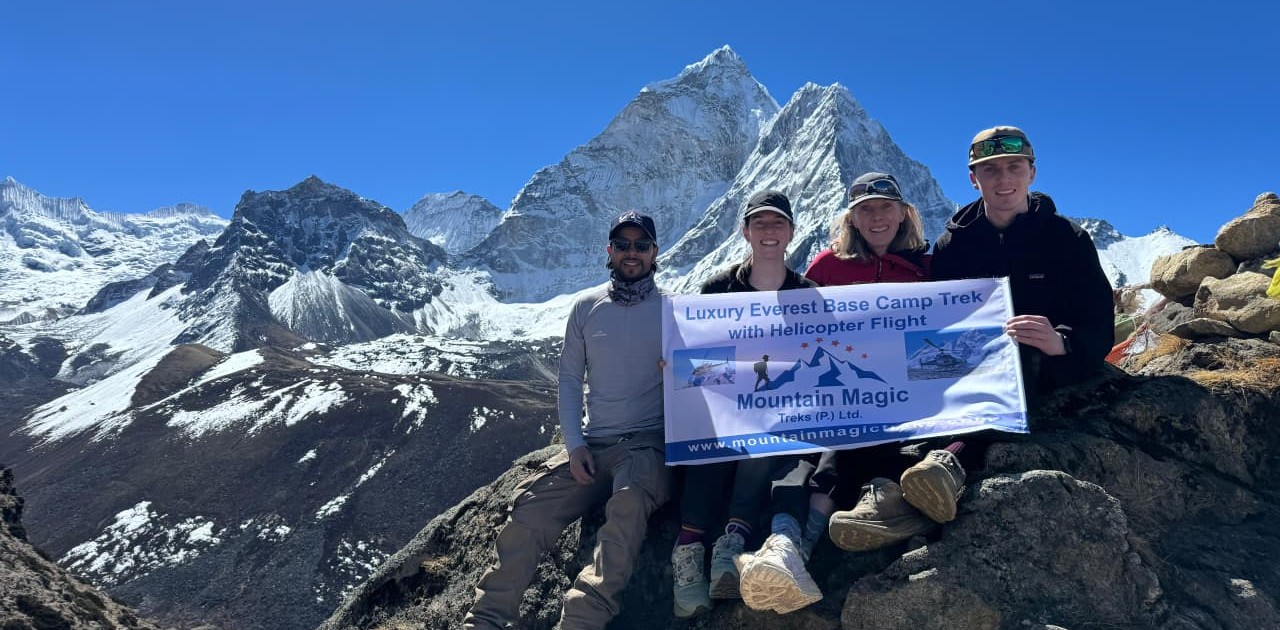
Standing at the foot of Mount Everest is a dream for many travelers. But the usual Everest Base Camp trek takes time, energy, and several extra days to walk back after reaching the base camp. For people with a busy schedule, there is another option. The Everest Base Camp Trek with helicopter return lets you walk through the famous Khumbu region and then fly back instead of repeating the same trail.
This makes the trip feel different from a classic Everest trek. You still walk through Sherpa villages, cross suspension bridges, visit monasteries, and reach Everest Base Camp. The big difference comes at the end. After completing the main trekking section, a helicopter takes you back toward Kathmandu.
It is a good choice for travelers who want the real trekking experience but do not want to spend several additional days walking downhill.
Why Choose a Helicopter Return From Everest?
A normal Everest Base Camp trek requires you to walk back after reaching the destination. That return journey can take several days.
With the Everest Base Camp Trek with helicopter return, you do not need to repeat the full route. Once the trekking goal is complete, the helicopter provides a fast and scenic way to leave the high mountains.
This can be useful for people who have limited vacation time.
The flight also gives you something walking cannot offer: a wide view of the Everest region from above. You can see valleys, glaciers, villages, rivers, and snow-covered peaks from a completely different angle.
More Time for the Best Parts
The biggest advantage is not simply speed.
You spend your walking days exploring the most memorable sections of the route instead of using extra days to return through the same villages.
The journey includes places such as Namche Bazaar, Tengboche, Dingboche, Lobuche, Gorakshep, and Everest Base Camp. Each section has its own scenery and character.
What the Trek Is Really Like
The Everest Base Camp Trek with helicopter return is not an easy walk. The route reaches high altitude, and some days involve several hours of trekking.
The itinerary begins with a helicopter flight from Kathmandu to Lukla. From Lukla, the journey continues on foot toward Phakding and Namche Bazaar.
Namche is an important stop because your body needs time to adjust to the increasing altitude.
Acclimatization Matters
You should never treat acclimatization as wasted time.
The itinerary includes acclimatization days at Namche Bazaar and Dingboche. These breaks help your body adjust before you climb higher.
At Namche, trekkers can take short hikes and enjoy views of the surrounding mountains. Dingboche offers another chance to spend time at altitude before continuing toward Lobuche and Gorakshep.
Going too high too quickly can increase the risk of altitude sickness. A good trek is not about moving as fast as possible. It is about moving at a pace your body can handle.
From Sherpa Villages to Everest Base Camp
One of the best things about this journey is that Everest is not the only attraction.
The trail passes through Sherpa communities where Buddhist culture is part of everyday life. You will see prayer flags, monasteries, stone walls, mountain homes, and small tea houses along the route.
Tengboche is another memorable stop. The area is known for its monastery and mountain views.
As the trail climbs higher, the landscape changes. Green hills slowly give way to rocky ground, glaciers, and huge peaks.
By the time you reach Gorakshep, you are deep inside the high Himalayas.
Reaching Everest Base Camp
The walk from Gorakshep to Everest Base Camp is one of the main goals of the trip.
The trail follows the rugged terrain near the Khumbu Glacier. The surroundings become more dramatic as you approach the base camp.
Once you arrive, there is time to take photos and enjoy the achievement.
But the journey does not end there.
Why Kala Patthar Is Worth the Extra Effort
Many trekkers consider Kala Patthar one of the best viewpoints in the Everest region.
The summit reaches around 5,545 meters and provides a close view of Mount Everest along with other major Himalayan peaks.
An early-morning hike can be especially rewarding because the light changes across the mountains as the sun rises.
The climb is short compared with the entire trek, but the altitude makes it demanding. You should walk slowly and listen to your guide.
After returning to Gorakshep, the helicopter journey begins.
The Helicopter Ride Back
The helicopter return is more than transportation.
After spending days surrounded by mountains at ground level, seeing the Khumbu region from the air can be an unforgettable final experience.
Depending on weather and flight conditions, the helicopter may travel through or stop around areas such as Lukla or Namche before continuing toward Kathmandu.
Mountain weather can change quickly, so flight timing should always remain flexible.
Weather Is an Important Factor
A helicopter cannot simply fly because the itinerary says it should.
Cloud, wind, visibility, and other mountain conditions can affect flights. This is one reason travelers should keep some flexibility in their plans.
Good travel insurance is also important for high-altitude trekking.
When Should You Go?
Spring and autumn are generally the most popular seasons for this trek.
March through May offers warmer daytime conditions and blooming rhododendrons in many lower areas.
September through November usually brings clearer skies after the monsoon season.
Winter can be much colder, while summer monsoon weather can make trekking and mountain flights more difficult.
Who Is This Trek Best For?
The Everest Base Camp Trek with helicopter return can be a strong option for travelers who:
- Have limited vacation time
- Want to experience a real Everest trek
- Prefer not to walk the full return route
- Want an aerial view of the Himalayas
- Are comfortable with several days of high-altitude trekking
- Want to combine adventure with a faster return
It is not the right choice simply because it includes a helicopter. The trekking section is still physically demanding.
Final Thoughts
The Everest Base Camp Trek with helicopter return combines two very different experiences: walking through the heart of the Himalayas and flying above the mountains at the end.
You get time in Sherpa villages, high mountain landscapes, monasteries, glaciers, Everest Base Camp, and Kala Patthar without spending several extra days retracing the same trail.
For travelers who want to experience Everest but have a limited schedule, this can be a practical and exciting way to make the dream happen.
Frequently Asked Questions
How long is the Everest Base Camp trek with helicopter return?
The itinerary offered by Mountain Magic Treks is designed as a 10-day journey from arrival in Kathmandu to departure.
Is the trek difficult?
It is rated moderate to strenuous because of long walking days and high altitude. Good preparation and proper acclimatization are important.
Where does the helicopter return begin?
The return flight is arranged from the Gorakshep area, subject to weather and flight conditions.
What is the highest point?
Kala Patthar is the highest point in the listed itinerary, at approximately 5,545 meters.
What is the best season for this trek?
Spring and autumn are generally considered the most favorable seasons because of better weather and mountain visibility.
