
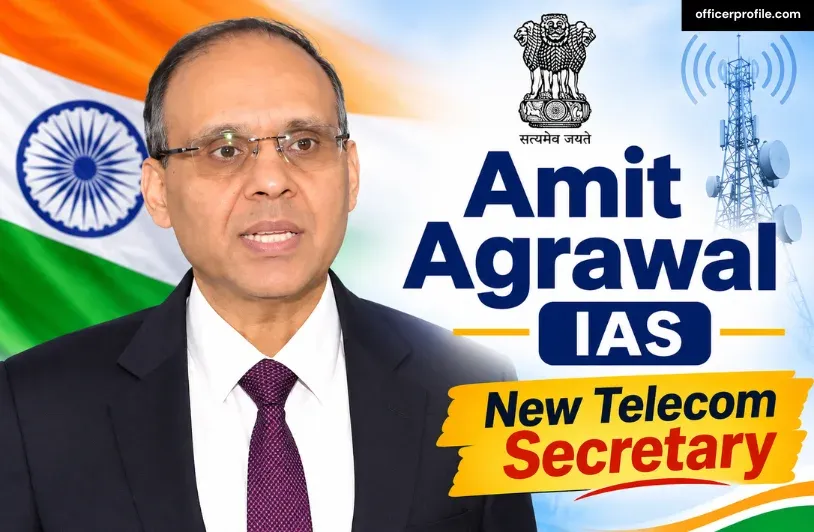
Amit Agrawal is a 1993-batch IAS officer from the Chhattisgarh cadre and an IIT Kanpur alumnus. He took charge as Secretary, Department of Telecommunications (DoT) on January 1, 2026. His 32-year career spans state administration, finance, digital governance (MeitY, UIDAI), pharmaceuticals, and now telecom. He is driving India’s 5G/6G future, launched the country’s first Telecom Manufacturing Zone in Gwalior and his DoT tenure runs until June 2030.
Quick Information: Amit Agrawal IAS
| Field | Details |
|---|---|
| Full Name | Amit Agrawal |
| Profession | Indian Administrative Service (IAS) Officer |
| Date of Birth | 27 June 1970 |
| Age (2026) | 56 Years |
| Birth Place | Uttar Pradesh, India |
| Nationality | Indian |
| Religion | Not officially confirmed |
| Education | B.Tech in Electrical Engineering |
| College | Indian Institute of Technology (IIT), Kanpur |
| IAS Batch | 1993 |
| Cadre | Chhattisgarh |
| Current Role | Secretary, Department of Telecommunications (DoT) |
India’s telecom sector got a new captain on January 1, 2026. Amit Agrawal New Telecom Secretary took charge of the Department of Telecommunications (DoT) after a high-level bureaucratic reshuffle cleared by the Appointments Committee of the Cabinet (ACC) in November 2025.
Shri Amit Agrawal IAS is a 1993-batch officer of the Chhattisgarh cadre. He brings over three decades of experience across fields like finance, e-governance, pharmaceuticals, and digital technology. Before DoT, he served as Secretary of the Department of Pharmaceuticals and before that as CEO of UIDAI (Unique Identification Authority of India).
He is a graduate of the prestigious Indian Institute of Technology (IIT), Kanpur. His track record makes him one of India’s most versatile senior bureaucrats. Under his leadership, DoT has already pushed ahead with India’s first Telecom Manufacturing Zone, 5G and 6G planning, and significant restructuring of the department itself.
Amit Agrawal New Telecom Secretary: Age, Early Life and Education
Childhood and Early Years
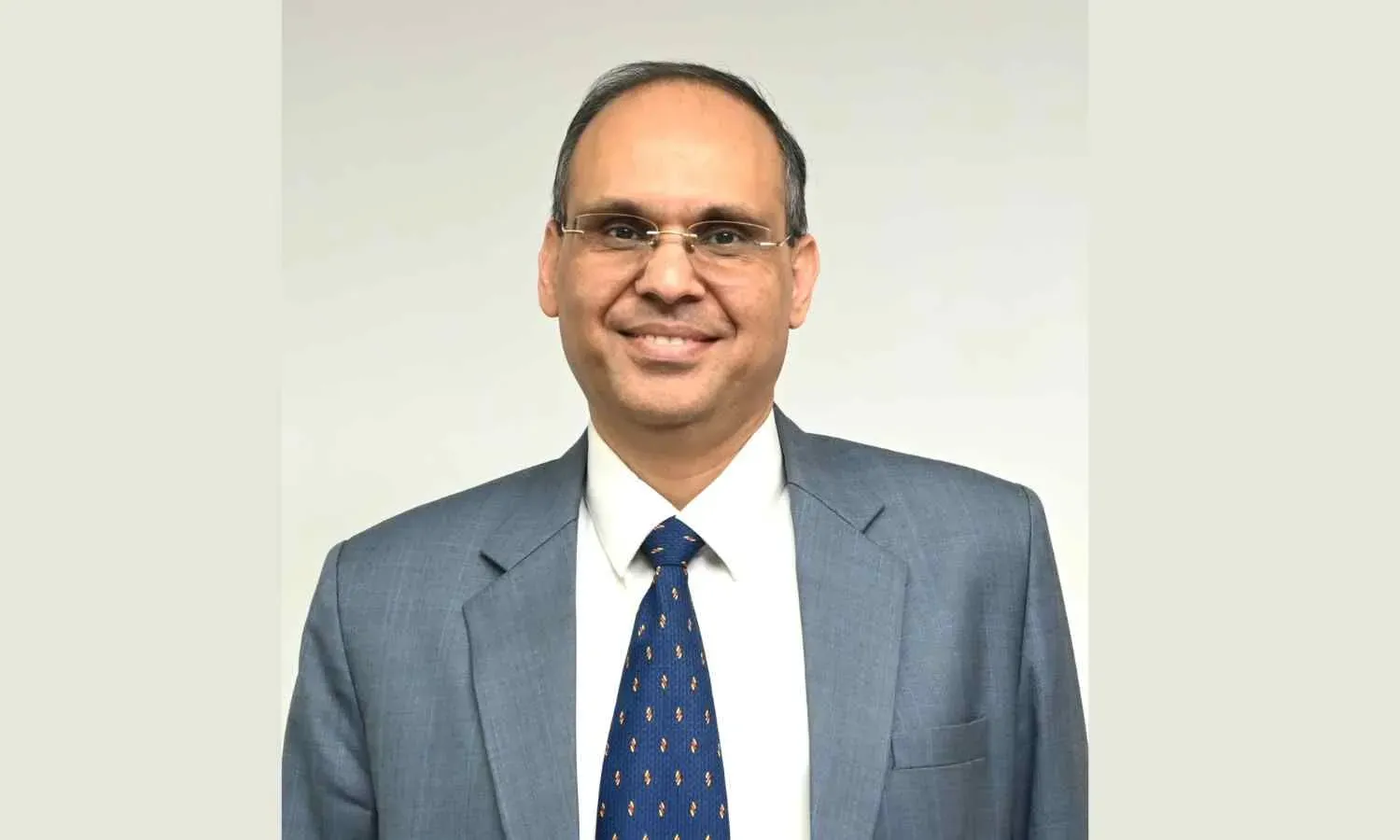
Amit Agrawal was born on 27 June 1970 in Uttar Pradesh, India. As of 2026, he is 56 years old.
Not much has been officially shared about his early childhood or schooling years. His family background and hometown details have not been disclosed publicly.
What is clear from his later career is that he had a sharp academic mind from an early age. He went on to clear one of India’s most competitive engineering entrance exams.
Education at IIT Kanpur
Amit Agrawal studied at the Indian Institute of Technology (IIT), Kanpur — one of India’s top-ranked technical institutions. He completed his B.Tech in Electrical Engineering (batch of 1991).
Clearing IIT entrance and graduating with a technical degree is a major achievement. It laid a strong foundation for his future work in technology policy, digital governance, and now telecommunications.
UPSC Civil Services Examination
After his engineering degree, Amit Agrawal cracked the UPSC Civil Services Examination. He joined the 1993 batch of the Indian Administrative Service (IAS) and was allotted the Chhattisgarh cadre.
| Education Detail | Information |
|---|---|
| School | Not officially disclosed |
| Graduation | B.Tech in Electrical Engineering |
| University | IIT Kanpur (Batch of 1991) |
| Civil Services Batch | 1993 |
| Cadre | Chhattisgarh |
| First Posting | Assistant Collector, General Administration Department, Raipur (June 22, 1994) |
Amit Agrawal New Telecom Secretary: Career Journey
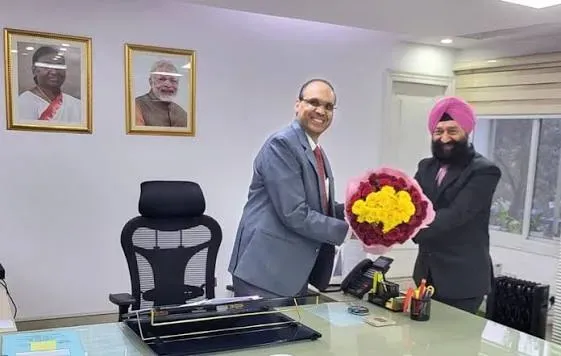
Amit Agrawal has had a long and varied career spanning over 32 years. He has served both at the state level in Chhattisgarh and Madhya Pradesh and at the central government level in multiple key ministries.
State-Level Career in Chhattisgarh
He started his career as an Assistant Collector in the General Administration Department, Raipur, on June 22, 1994.
Over the years, he held several key positions in Chhattisgarh:
- District Collector, Mahasamund
- Joint Secretary, Technical Education & Manpower Planning Department, Raipur
- CEO, Chhattisgarh Infotech & Biotech Promotion Society (IT & e-Governance)
- Finance Secretary, Chhattisgarh
- Secretary, Technical Education Department (from September 6, 2013)
- Secretary, Department of Commercial Tax, Chhattisgarh
His time as Finance Secretary and in the Technical Education Department showed his ability to manage complex government systems at the state level.
Central Government Postings
Amit Agrawal moved to the central government on deputation and held several powerful positions in New Delhi:
- Deputy Secretary / Director / Advisor, Prime Minister’s Office (PMO)
- Joint Secretary, Ministry of Finance, New Delhi (from December 26, 2016)
- Additional Secretary, Ministry of Electronics and Information Technology (MeitY) (May 2022 – June 2023)
- CEO, Unique Identification Authority of India (UIDAI) (June 19, 2023 – December 2024)
- Secretary, Department of Pharmaceuticals, Ministry of Chemicals & Fertilizers (December 2024 – December 2025)
- Secretary, Department of Telecommunications (DoT) (January 1, 2026 – present)
Career Timeline Table
| Period | Role | Organisation |
|---|---|---|
| June 1994 | Assistant Collector | General Administration Dept, Raipur |
| 1994–1996 (approx) | Joint Secretary | Technical Education Dept, Raipur |
| Late 1990s–2000s | District Collector | Mahasamund, Chhattisgarh |
| 2000s | CEO | Chhattisgarh Infotech & Biotech Promotion Society |
| 2000s | Finance Secretary | Government of Chhattisgarh |
| Sep 2013 | Secretary | Technical Education Department, Raipur |
| Dec 2016 – 2020 | Joint Secretary | Ministry of Finance, New Delhi |
| 2020–2022 | PMO Advisor / Director | Prime Minister’s Office, New Delhi |
| May 2022 – Jun 2023 | Additional Secretary | Ministry of Electronics & IT (MeitY) |
| Jun 2023 – Dec 2024 | CEO | UIDAI, New Delhi |
| Dec 2024 – Dec 2025 | Secretary | Department of Pharmaceuticals |
| Jan 1, 2026 – present | Secretary (Telecom) | Department of Telecommunications (DoT) |
Amit Agrawal IAS as Telecom Secretary: Responsibilities & Vision
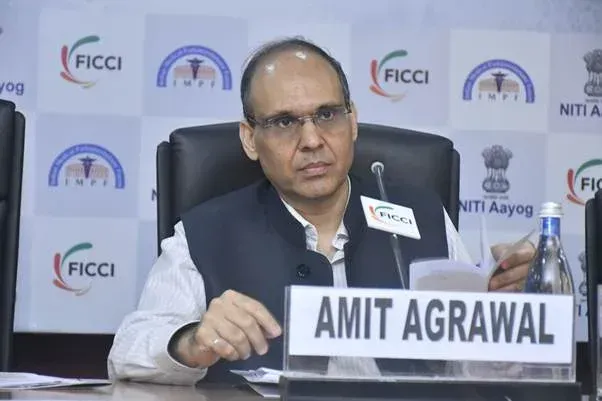
As the Amit Agrawal New Telecom Secretary, he now leads one of India’s most strategically important government departments.
His key responsibilities at DoT include:
- 5G Expansion – India already has 5G in almost every district, with roughly 1.2 billion mobile connections across the country.
- 6G and AI-Native Networks – DoT has outlined AI-native 6G networks as a priority for the next phase of India’s telecom infrastructure.
- Spectrum Management – Managing and allocating radio frequency spectrum to operators efficiently.
- BSNL and MTNL Revival – Overseeing the turnaround of India’s public sector telecom units. BSNL’s average revenue per user (ARPU) jumped 42% to ₹101 in FY 2025–26.
- Quantum-Safe Communications – Preparing India’s telecom stack for quantum security challenges.
- Indigenous Telecom Technology – Pushing ahead with India’s homegrown telecom stack.
- Vi–BSNL Infrastructure Talks – He has told the Parliamentary Committee on Communications that Vodafone Idea (Vi) and BSNL have started talks on possible infrastructure and spectrum sharing.
- Telecom Manufacturing – Driving India’s ambition to become a global telecom manufacturing hub.
His tenure at DoT is expected to continue until June 2030.
DoT Priority Areas Under Amit Agrawal
| Priority Area | Current Status / Goal |
|---|---|
| 5G Coverage | 99.9% of districts; ~85% population covered |
| 6G Research | AI-native network framework being defined |
| BSNL Revival | ARPU grew 42% YoY to ₹101 in FY26 |
| Spectrum Management | Ongoing allocation for 5G and satellite bands |
| Quantum-Safe Networks | Research and standardisation phase |
| Vi–BSNL Talks | Infrastructure and spectrum sharing under discussion |
| Indigenous Telecom Stack | Continuing from previous leadership |
| Telecom Manufacturing Zone | Phase 1 launched in Gwalior, July 2026 |
Landmark Initiative: India’s First Telecom Manufacturing Zone (Gwalior)
One of Amit Agrawal’s biggest decisions as Telecom Secretary came on July 30, 2026, when the DoT and the Government of Madhya Pradesh signed an MoU to set up India’s first Telecom Manufacturing Zone (TMZ) in Gwalior.
This is a historic step in India’s journey from being one of the world’s largest telecom markets to becoming a global centre for telecom design, development, and manufacturing.
What is the Gwalior TMZ?
The TMZ is designed as an integrated ecosystem — much like a Special Economic Zone (SEZ) but exclusively for telecom. It will bring together design, R&D, testing, and manufacturing under one roof.
Agrawal heads the Special Purpose Vehicle (SPV) created to manage the TMZ. He described the zone as “a single nucleus that will serve as the hub and ecosystem node for the entire country.”
Investment and Jobs
| TMZ Metric | Details |
|---|---|
| Location | Gwalior, Madhya Pradesh |
| Phase 1 Investment Target | ₹2,000 crore |
| Phase 1 Jobs Target | 4,500+ jobs |
| Next Stage Investment Target | ₹10,000 crore (at least) |
| Total Investment Commitments Secured | ₹5,500 crore (as of August 2026) |
| Projected Total Jobs | 18,000+ jobs |
| MoU Signed | July 30, 2026 |
| Foundation Stone Laying | July 30, 2026 |
The Gwalior TMZ fits squarely into Prime Minister Narendra Modi’s vision of Atmanirbhar Bharat (self-reliant India). Agrawal said the zone would “attract substantial investment, create skilled employment, and generate new opportunities for local enterprises and young professionals.”
A Major Institutional Restructuring: Digital Communications Commission Dissolved 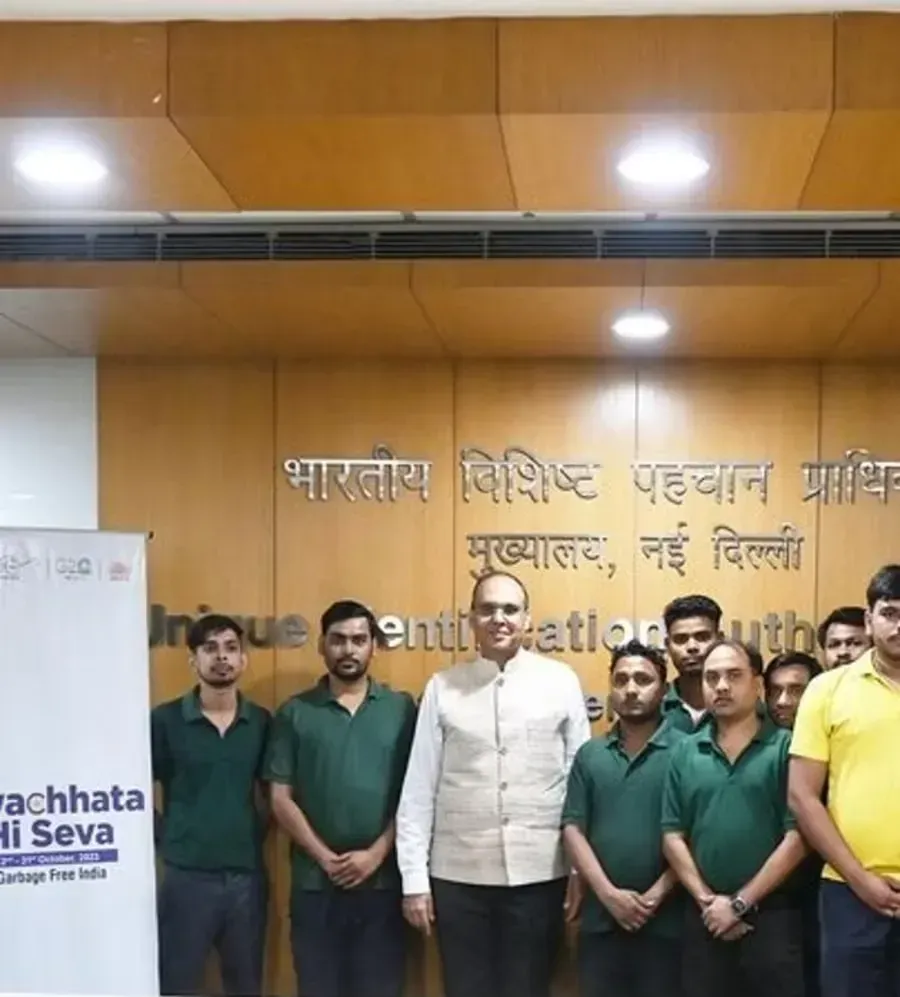
Another landmark development under Amit Agrawal’s watch was the dissolution of the Digital Communications Commission (DCC) in September 2026.
The DCC was originally formed in April 1989 as the Telecom Commission and renamed in 2018. It served as DoT’s apex inter-departmental decision-making body for nearly 37 years.
With its dissolution on September 19, 2026, its approval functions were transferred to the Telecom Secretary (and the Communications Minister or Cabinet, depending on the value involved). This directly increased the power and responsibility of the Telecom Secretary’s office.
This restructuring makes the DoT faster and more direct in taking key decisions — from spectrum pricing to satellite broadband policy.
AI, Global Outreach & Policy Vision
AI Will Define India’s Digital Growth
In January 2026, shortly after taking charge, Agrawal addressed the annual forum of telecom and digital ministers from the 11 ASEAN Member States. He said AI will shape India’s next phase of digital growth and reaffirmed India’s commitment to ASEAN-India digital cooperation.
He also shared India’s Sanchar Saathi initiative — a telecom user protection and fraud prevention platform — with ASEAN partners as a model they could learn from.
His key message: “India is approaching AI with a clear conviction — innovation must be aligned with responsibility, transparency, and public trust.”
India Mobile Congress 2026
At India Mobile Congress 2026, Agrawal pushed for innovation to go beyond competitions and prototypes. He called for IP creation, entrepreneurship, industry partnerships, and commercial deployment as the real measures of telecom innovation success.
He also highlighted that roughly 36% of India’s telecom network still runs on legacy infrastructure — underlining the need for continuous monitoring, upgrades, and quantum-safe readiness.
Amit Agrawal IAS: Role at UIDAI
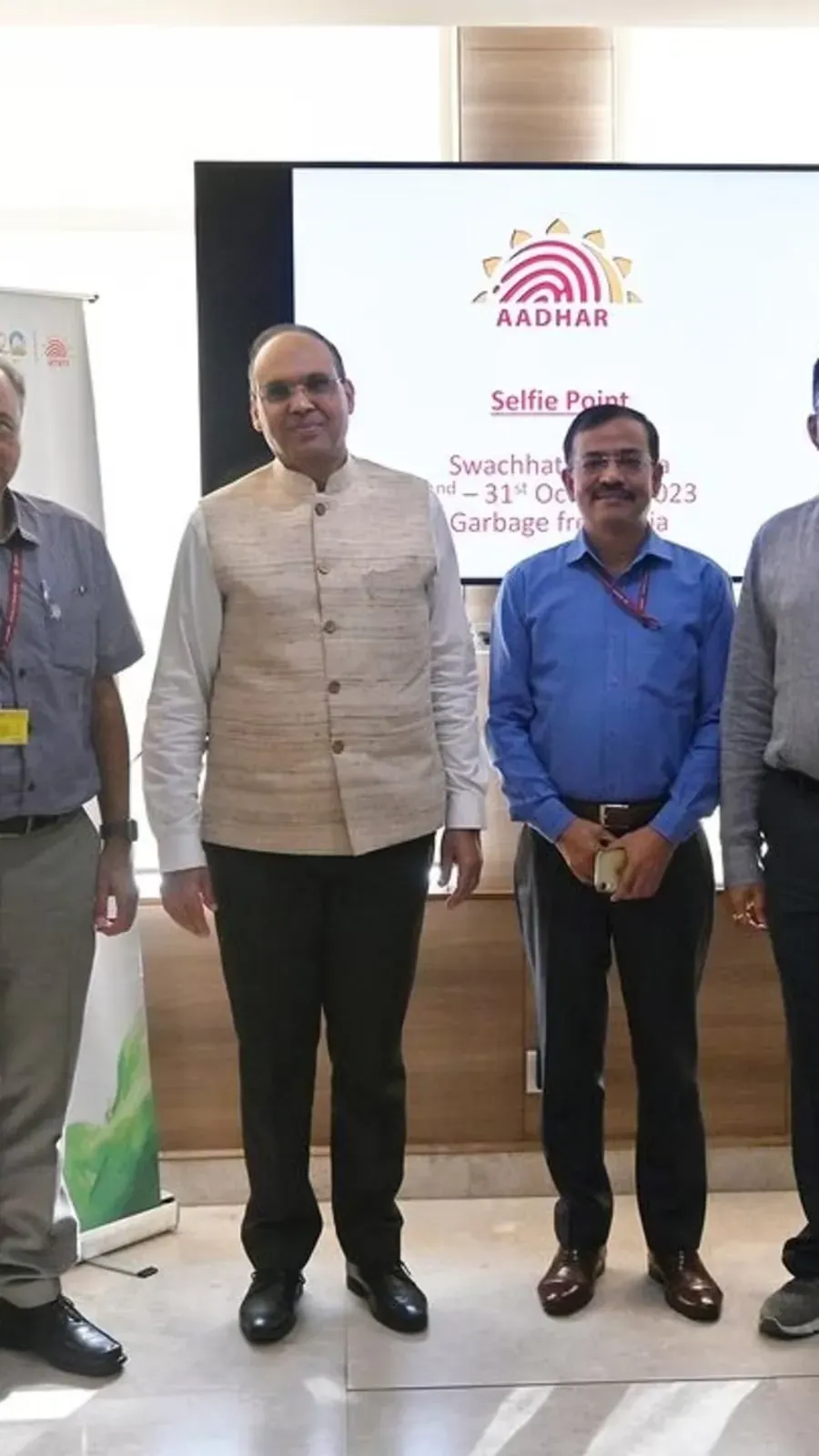
One of the most high-profile roles in Amit Agrawal’s career before DoT was as CEO of UIDAI (Unique Identification Authority of India).
He took charge on June 19, 2023, replacing the retiring Saurabh Garg. The government later extended his UIDAI tenure by one year beyond November 2, 2023.
UIDAI manages India’s Aadhaar system — the world’s largest biometric identification platform. As CEO, Agrawal oversaw operations affecting over a billion citizens.
In his first address as UIDAI CEO, he committed to “making Aadhaar more accessible and secure.” He was also recognised as an expert in IT and e-governance, and served as Chairman of the National Digital Communications Policy Committee during this period.
He also served on the boards of Indian Bank and ICICI Bank Limited in prior years as government nominee director.
Amit Agrawal IAS as Telecom Secretary vs Predecessors
| Secretary | Tenure at DoT | Key Initiatives |
|---|---|---|
| Amit Agrawal | Jan 2026 – June 2030 (expected) | TMZ Gwalior, 6G planning, DCC dissolution, AI policy |
| Neeraj Mittal | Sep 2023 – Nov 2025 | Indigenous telecom stack, BSNL 4G (1 lakh sites) |
| K. Rajaraman | 2022 – 2023 | 5G spectrum auction, Digital India expansion |
Published Works
During his training period as an IAS officer, Amit Agrawal showed intellectual depth by authoring books on education:
| Book Title | Year Published |
|---|---|
| Multigrade Teaching Concepts and Dimensions | 1997 |
| Synergy: Monograph on Multigrade Methodology | 1998 |
These books focused on innovative teaching methodologies — a rare and impressive contribution from a young IAS probationer.
Awards & Achievements
Amit Agrawal’s career is rich with professional milestones. While no specific government citations have been officially publicised in publicly accessible records, his track record reflects a strong set of achievements:
- Appointed CEO of UIDAI – One of India’s highest-profile tech-governance roles, managing the Aadhaar ecosystem for over 1 billion people.
- Served in the Prime Minister’s Office – A posting reserved for the most capable IAS officers.
- Led MeitY’s digital agenda as Additional Secretary during a critical phase of Digital India.
- Appointed Telecom Secretary – Heading one of India’s most strategic ministries.
- Finance Secretary, Chhattisgarh – Managed state finances effectively.
- Authored two books during his training period — a rare distinction.
- Bank Board Member — Government nominee on boards of Indian Bank and ICICI Bank.
- Launched India’s first Telecom Manufacturing Zone in Gwalior — a landmark Atmanirbhar Bharat initiative.
- Chaired National Digital Communications Policy Committee during UIDAI tenure.
- Oversaw DCC dissolution — a 37-year-old institution restructured under his watch.
Success Story: From IIT to India’s Telecom Helm
Amit Agrawal’s journey is a textbook example of a tech-trained administrator rising through the ranks to shape national policy.
He started as an engineer at IIT Kanpur. Rather than a corporate career, he chose public service — clearing the UPSC and entering the IAS in 1993.
As a young officer in Chhattisgarh, he built skills in ground-level administration — collecting revenue, managing districts, and overseeing finance. He then moved to the IT sector of governance, running Chhattisgarh’s tech promotion body long before “digital India” was a buzzword.
His central deputation brought him to the PMO, where only the finest IAS officers are posted. He then moved through MeitY and UIDAI — placing him at the heart of India’s digital identity infrastructure.
Today, as Amit Agrawal New Telecom Secretary, he oversees a sector with 1.2 billion mobile connections and is steering India from a 5G nation to a 6G-ready one — while simultaneously building the country’s first telecom manufacturing ecosystem.
His story is not just about career milestones. It is about one engineer-turned-civil-servant’s quiet but consistent contribution to building Digital India, one posting at a time.
Interesting Facts About Amit Agrawal IAS
- 🎓 IIT Kanpur alumnus — B.Tech in Electrical Engineering, Batch of 1991 — one of India’s most elite technical institutions.
- 🏛️ 1993 IAS batch, Chhattisgarh cadre — Among the senior-most active IAS officers serving at the Secretary level today.
- 📱 Head of UIDAI — Managed Aadhaar, the world’s largest biometric ID system, as CEO for over a year.
- 🏭 Launched India’s first Telecom Manufacturing Zone — The Gwalior TMZ has already secured ₹5,500 crore in investment commitments and aims to create 18,000 jobs.
- 🏦 Bank Board Director — Served as a government nominee on boards of Indian Bank and ICICI Bank.
- 📡 Leads India’s telecom department — Took charge as DoT Secretary on January 1, 2026, overseeing 1.2 billion mobile connections.
- ✍️ Author of two books — Wrote books on multigrade teaching methodology during his IAS training years.
- 🏢 PMO experience — Served as Deputy Secretary, Director, and Advisor in the Prime Minister’s Office — a rare career distinction.
- 📊 Multi-ministry expertise — His career spans Finance, IT & Electronics, Pharmaceuticals, and Telecommunications.
- 🔬 Oversaw DCC dissolution — The 37-year-old Digital Communications Commission was dissolved under his tenure, giving the Telecom Secretary direct decision-making power.
- 🤝 Global digital diplomacy — Represented India’s AI and digital vision at ASEAN telecom forums in January 2026.
- 📅 Tenure until 2030 — His stint as Telecom Secretary is expected to run until June 2030.
Conclusion
Amit Agrawal New Telecom Secretary is one of India’s most experienced and technically grounded IAS officers. His career spanning over three decades covers state-level administration, central finance, digital governance, pharmaceuticals, and now telecommunications.
From starting as an Assistant Collector in Raipur in 1994 to launching India’s first Telecom Manufacturing Zone and dissolving a 37-year-old institution in 2026, Shri Amit Agrawal IAS has shown consistent growth, bold decision-making, and adaptability.
His IIT Kanpur training, his work at MeitY and UIDAI, and his experience across five major ministries make him the right person to guide India’s telecom sector into the 6G era. With BSNL showing a 42% jump in ARPU, 5G reaching virtually every district, and ₹5,500 crore already committed for the Gwalior TMZ, Amit Agrawal New Telecom Secretary is not just managing a ministry — he is building the infrastructure backbone of tomorrow’s India.
Read More:
- Saloni Verma IAS
- Surabhi Gautam IAS
- Arjun Gowda IAS
- Durga Shakti Nagpal
- Nalin Prabhat IPS
- Charu Nigam IPS
- IAS Santosh Verma
- Sagayam IAS
- Aastha Singh IAS
- Satyam Gandhi IAS
- Gaurav Agarwal IAS
- Krishna Teja IAS
- Abhilasha Sharma IAS
- IAS Rinku Singh Rahi
- Abhishek Pandey IAS
- Naresh Pal Gangwar IAS
- Dr Subrata Gupta IAS
- IPS Tanushree
- Akansh Dhull
Frequently Asked Questions (FAQs)
1. Who is Amit Agrawal New Telecom Secretary?
Amit Agrawal is a 1993-batch IAS officer from the Chhattisgarh cadre who took charge as Secretary, Department of Telecommunications (DoT) on January 1, 2026. He succeeded Neeraj Mittal, who was moved to the Ministry of Petroleum and Natural Gas.
2. What is Amit Agrawal IAS batch and cadre?
Amit Agrawal belongs to the 1993 batch of the Indian Administrative Service and is a member of the Chhattisgarh cadre.
3. Where did Amit Agrawal complete his education?
He completed his B.Tech in Electrical Engineering from IIT Kanpur (batch of 1991) before cracking the UPSC Civil Services Examination.
4. What was Amit Agrawal’s role before becoming Telecom Secretary?
Before DoT, he was Secretary of the Department of Pharmaceuticals under the Ministry of Chemicals and Fertilizers (December 2024 – December 2025).
5. What was Amit Agrawal’s role at UIDAI?
He served as CEO of UIDAI from June 19, 2023 to December 2024. His tenure was extended by one year by the ACC. UIDAI manages India’s Aadhaar biometric ID system.
6. What is the Telecom Manufacturing Zone (TMZ) in Gwalior?
The TMZ is India’s first dedicated telecom manufacturing zone, launched in Gwalior, Madhya Pradesh on July 30, 2026. Agrawal heads the SPV managing it. Phase 1 targets ₹2,000 crore investment and 4,500 jobs. Total commitments secured so far: ₹5,500 crore.
7. When did Amit Agrawal take charge as Telecom Secretary?
He formally assumed office as Secretary, Department of Telecommunications on January 1, 2026.
8. How long will Amit Agrawal serve as Telecom Secretary?
His tenure as Telecom Secretary is expected to continue until June 2030.
9. What was the Digital Communications Commission and why was it dissolved?
The DCC was DoT’s apex inter-ministerial decision-making body, originally formed in 1989 as the Telecom Commission. It was dissolved on September 19, 2026, under Agrawal’s watch, transferring its approval powers directly to the Telecom Secretary, the Communications Minister, or the Cabinet.
10. Did Amit Agrawal serve in the PMO?
Yes. He held multiple positions in the Prime Minister’s Office (PMO) in New Delhi, including roles as Deputy Secretary, Director, and Advisor.
11. What is Amit Agrawal’s vision for AI and telecom?
He stated that “AI will define India’s next phase of digital growth” and that “innovation must be aligned with responsibility, transparency, and public trust.” He shared India’s Sanchar Saathi fraud-prevention model at ASEAN digital forums.
12. What committees has Amit Agrawal chaired?
He served as Chairman of the National Digital Communications Policy Committee during his tenure as UIDAI CEO. He also heads the Special Purpose Vehicle (SPV) managing the Gwalior Telecom Manufacturing Zone.
