
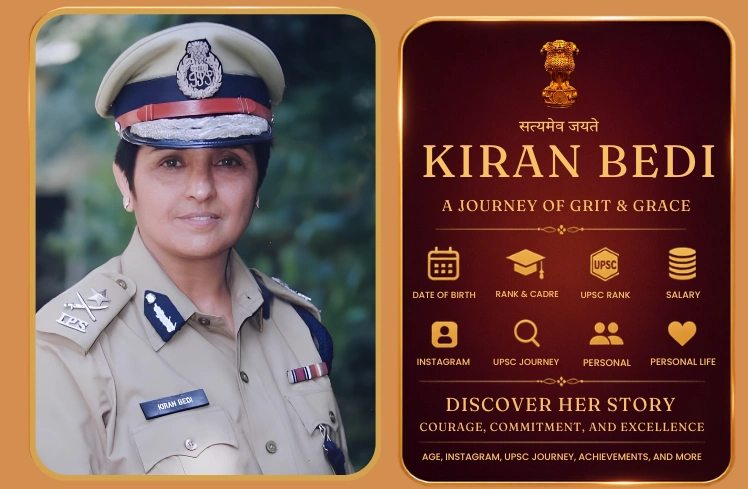
Kiran Bedi is one of the most respected names in Indian public service. She made history in 1972 by becoming the first woman to join the Indian Police Service (IPS). This Kiran Bedi IPS biography looks at her full journey — from a young tennis champion in Amritsar to a tough police officer, prison reformer, and later the Lieutenant Governor of Puducherry.
Millions of people search for “Who is Kiran Bedi” every year, especially UPSC aspirants who study her life for lessons in courage and discipline. Her story shows what it means to stand firm on rules, even under heavy pressure.
Quick Facts Summary — Kiran Bedi At a Glance
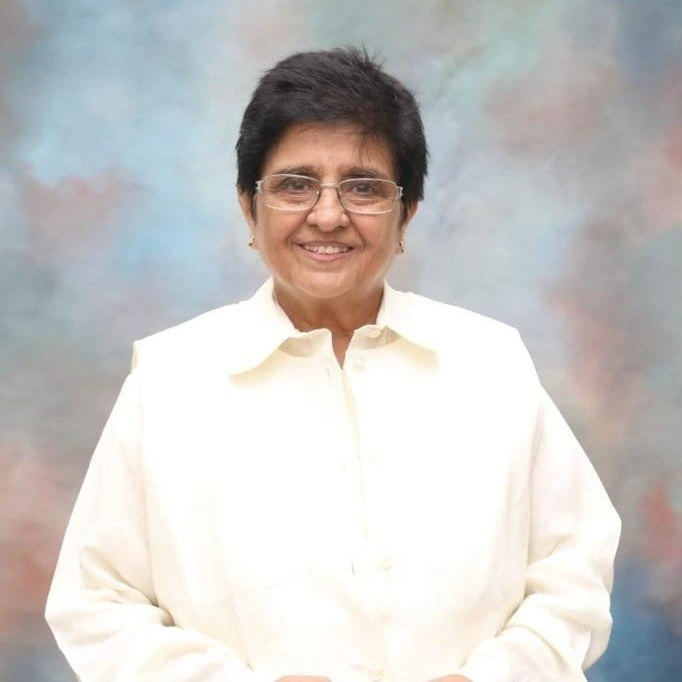
| Category | Details |
|---|---|
| Full Name | Kiran Peshawaria (later Kiran Bedi) |
| Nickname | “Crane Bedi” (for towing away an illegally parked car) |
| Known For | First woman IPS officer in India |
| Date of Birth | 9 June 1949 |
| Age (2026) | 77 years |
| Birth Place | Amritsar, Punjab, India |
| Nationality | Indian |
| Zodiac Sign | Gemini |
| Religion | Hindu (raised in a mixed Hindu–Sikh household) |
| Community | Punjabi Khatri (Arora) business family |
| Kiran Bedi Husband | Brij Bedi (m. 1972; the couple lived separately for decades but never divorced; Brij Bedi passed away in January 2016) |
| Kiran Bedi Daughter | Saina Bedi (Bharucha) |
| Kiran Bedi Granddaughter | Meher Bharucha |
| Education | B.A. English, M.A. Political Science, LL.B., Ph.D. (Social Sciences) |
| Profession | Retired IPS Officer, Social Activist, Author, Former Lieutenant Governor |
| Famous For | Tihar Jail reforms, community policing, Ramon Magsaysay Award |
| Current Role (2026) | Retired from government service; runs Navjyoti India Foundation, India Vision Foundation and Kiran Bedi Leadership Learnings |
Family & Personal Life
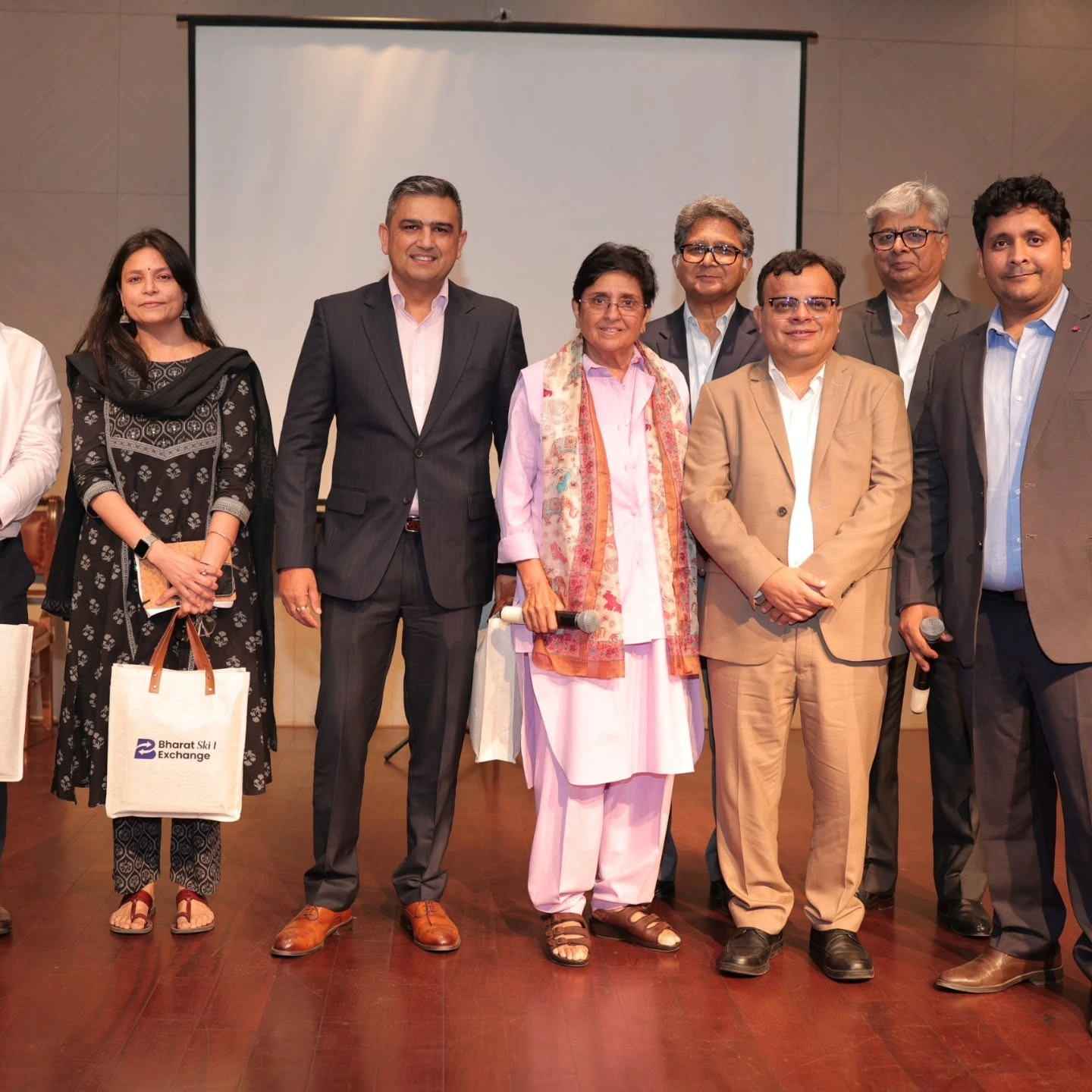
Father
Kiran Bedi’s father, Prakash Lal Peshawaria, was a businessman and a keen tennis player. He supported his daughter’s ambitions strongly and trained her in tennis himself.
Mother
Her mother, Prem Lata Peshawaria, focused on giving her daughters the best possible education. Kiran Bedi has often said she had full support from both parents growing up.
Husband
Kiran Bedi married Brij Bedi, a fellow tennis player from Amritsar, on 9 March 1972. He was nine years older than her and played tennis at the university level.
In the early years, Brij Bedi was very supportive of her career. However, the couple later lived separately, though they never officially divorced. Brij Bedi passed away on 31 January 2016 in Gurgaon.
Children
The couple had one daughter, born in September 1975. She was originally named Sukriti but later changed her name to Saina. Saina Bharucha (married name) now lives in Pune. She works with the Navjyoti India Foundation and India Vision Foundation, both founded by her mother, and also runs an organisation called Demonstrative Learning.
Granddaughter
Kiran Bedi has a granddaughter named Meher Bharucha, born to Saina and her husband, Ruzbeh N. Bharucha. Details about Meher’s current life and activities are Not Publicly Available, out of respect for her privacy as a private individual.
Siblings
Kiran Bedi is the second of four sisters:
- Shashi – a psychologist and artist based in Canada
- Reeta Peshawaria – a specialist who worked in the field of autism
- Anu Peshawaria – a well-known immigration lawyer in the United States
Marital and Family Snapshot
| Relation | Name |
|---|---|
| Father | Prakash Lal Peshawaria |
| Mother | Prem Lata Peshawaria |
| Husband | Brij Bedi (m. 1972; deceased 2016) |
| Daughter | Saina Bedi (Bharucha) |
| Son-in-law | Ruzbeh N. Bharucha |
| Granddaughter | Meher Bharucha |
| Marital Status | Widowed |
Kiran Bedi UPSC Educational Background
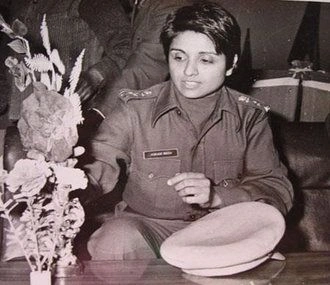
Kiran Bedi’s education journey is often cited as proof that intellectual curiosity and discipline can flourish anywhere — even in a small city like Amritsar in the 1950s and 60s.
| Level | Institution | Year | Achievement |
|---|---|---|---|
| Schooling | Sacred Heart Convent School, Amritsar | 1954–1965 | Active in NCC and extracurriculars |
| High School Science | Government College, Amritsar (transferred for science stream) | Mid-1960s | Matriculation with science, unusual for girls at the time |
| Bachelor’s Degree | Government College for Women, Amritsar | 1968 | B.A. in English |
| Master’s Degree | Punjab University, Chandigarh | 1970 | M.A. in Political Science |
| Law Degree | Delhi University | 1988 | LL.B. |
| Doctorate | IIT Delhi | 1993 | Ph.D. in Social Sciences (thesis on drug abuse and domestic violence) |
The UPSC / IPS Preparation Journey
Kiran Bedi did not follow a conventional “coaching-centre” path to the civil services the way many modern UPSC aspirants do today — there was, in fact, no precedent for a woman entering the IPS in India when she applied. Encouraged by her competitive instincts from tennis and her disciplined NCC training, she appeared for the civil services examination and cleared it in 1972, becoming the first woman ever selected into the Indian Police Service. The then-home secretary K C Pant tried to dissuade her from joining the police service as there were no women in it before her, but Kiran Bedi was determined. This single decision changed the shape of Indian law enforcement forever.
Physical Statistics
| Attribute | Details |
|---|---|
| Height | Approx. 5 ft 3 in (160 cm) |
| Weight | Approx. 55 kg |
| Eye Colour | Black |
| Hair Colour | Black (known for her short, practical haircut) |
| Build | Athletic (former national and Asian-level tennis champion) |
Kiran Bedi UPSC / Career Timeline
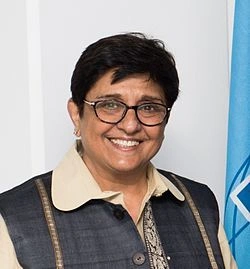
The Kiran Bedi career timeline reads like a masterclass in resilience. Below is a year-wise breakdown of her major postings and milestones.
| Year | Milestone / Posting |
|---|---|
| 1966 | Won the National Junior Tennis Championship |
| 1972 | Selected into the IPS — first woman officer in Indian police history |
| 1972 | Married Brij Bedi |
| 1974 | Won the Senior National Tennis title |
| 1975 | First posting: Sub-Divisional Police Officer, Chandni Chowk, Delhi; led the all-male Delhi Police contingent at the Republic Day Parade |
| 1975 | Birth of daughter Saina Bedi |
| Late 1970s | Postings across Delhi Police, gains reputation for strict traffic discipline (earns nickname “Crane Bedi”) |
| 1979 | Serves as SP in Goa |
| 1981 | Appointed DCP Traffic, Delhi — manages traffic for the Asian Games |
| Early 1980s | DCP West Delhi — introduces community “beat box” policing |
| 1983 | Posted to Mizoram as Deputy Inspector General amid regional tensions |
| 1986 | DCP North District, Delhi — tackles rampant drug abuse and founds Navjyoti Foundation (1988) |
| 1990 | Transferred to Mizoram as DIG Range |
| 1993 | Returns to Delhi; posted as Inspector General (IG), Tihar Jail |
| 1993–1995 | Transforms Tihar Jail into “Tihar Ashram” through education, meditation and rehabilitation reforms |
| 1994 | Wins the Ramon Magsaysay Award for Government Service; founds India Vision Foundation |
| 2003 | Becomes the first Indian and first woman appointed as UN Civilian Police Advisor, UN Department of Peace Operations |
| 2007 | Takes voluntary retirement as Director General, Bureau of Police Research and Development (BPRD), after 35 years of service |
| 2008–2011 | Hosts the popular TV court show Aap Ki Kachehri |
| 2011 | Key leader of the India Against Corruption movement alongside Anna Hazare |
| 2015 | Joins the Bharatiya Janata Party (BJP); contests as chief ministerial candidate in the Delhi Assembly Election (unsuccessful) |
| 2016 | Appointed 24th Lieutenant Governor of Puducherry (29 May 2016) |
| 2016–2021 | Serves as LG of Puducherry, introducing the “TEA” (Trust, Empowerment, Accountability) governance model |
| 2021 | Resigns as Lieutenant Governor of Puducherry (16 February 2021) |
| 2021–2026 | Focuses on writing, public speaking, and running Navjyoti India Foundation, India Vision Foundation, and Kiran Bedi Leadership Learnings (KBLL) |
UPSC Marksheet
Kiran Bedi joined the IPS in 1972 through the police service selection process used at that time. A detailed, sentence-by-sentence marksheet (written marks, interview marks) is Not Publicly Available in verified government or official records.
| Category | Details |
|---|---|
| Written Marks | Not Publicly Available |
| Interview Marks | Not Publicly Available |
| Total Marks | Not Publicly Available |
| AIR | Not Publicly Available |
| Category | General |
| Year | 1972 |
Major Achievements & Recognition (Kiran Bedi Awards)
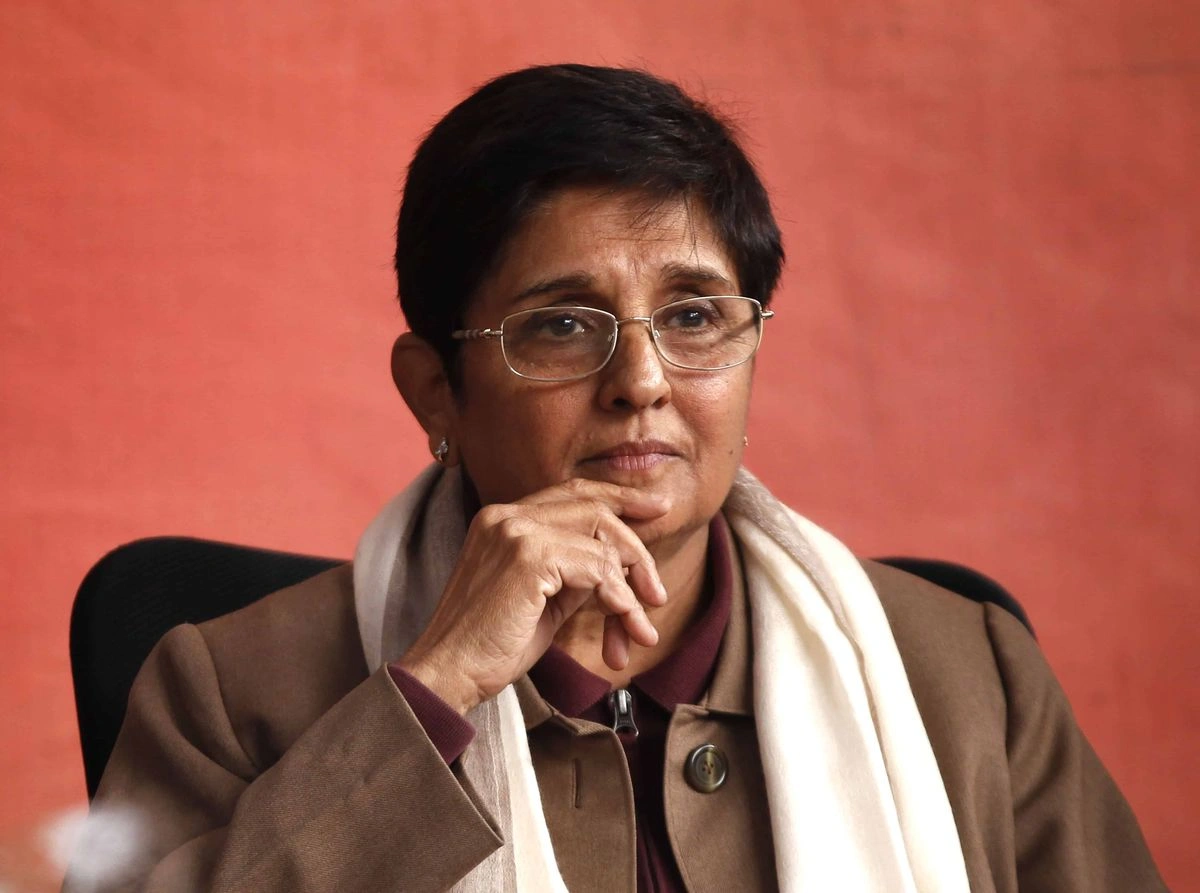
| Year | Award / Honour | Description |
|---|---|---|
| 1972 | Asian Tennis Champion | Recognised for excellence in competitive tennis before her IPS career |
| 1979 | President’s Police Medal for Gallantry | For handling the Akali–Nirankari clashes with courage |
| 1994 | Ramon Magsaysay Award for Government Service | Often called “Asia’s Nobel Prize”; awarded for her transformative reforms at Tihar Jail |
| 1995 | Women of the Year Award (India Today) | For her contribution to prison reform and women’s leadership |
| 1997 | Mother Teresa Memorial National Award for Social Justice | Awarded by the All India Christian Council for her prison and penal reforms |
| 2004 | Pride of India Award | Recognition of her overall contribution to nation-building |
| 2005 | Joseph Beuys Prize (Germany) | First police officer in the world to receive this international honour |
| 2010 | IIT Delhi Alumni Award for Outstanding Contribution to National Development | For her academic and social contributions |
| 2013 | Nomura Award | International recognition for social leadership |
| Various | Most Trusted/Admired Woman in India | Multiple reader polls by The Week and Reader’s Digest |
| Various | L’Oréal Paris Femina Women Award | For social impact and leadership |
Administrative Positions Held (Chronological)
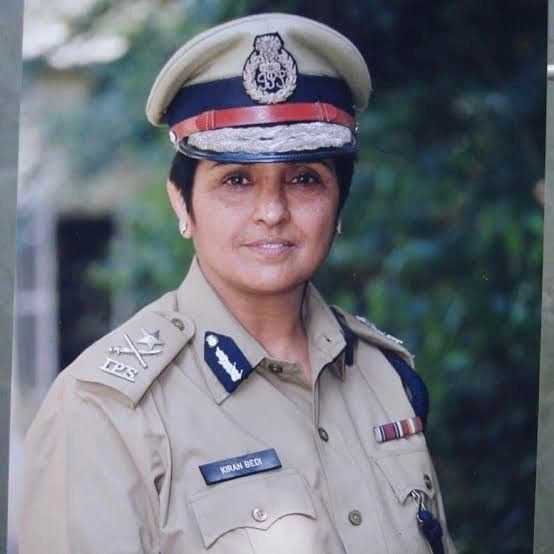
- Sub-Divisional Police Officer, Chandni Chowk, Delhi (1975)
- DCP Traffic, Delhi (1981) — Asian Games traffic management
- DCP West and DCP North, Delhi
- Deputy Inspector General, Mizoram (1983, and again 1990)
- Deputy Director, Directorate General of Industrial Contingency
- Inspector General (IG) of Prisons, Tihar Jail, Delhi (1993–1995)
- Special Secretary, Delhi Lieutenant Governor’s office
- Director General, Narcotics Control Bureau
- Advisor to the Lieutenant Governor, Chandigarh
- UN Civilian Police Advisor, UN Department of Peace Operations (2003–2007)
- Director General, Bureau of Police Research and Development (BPRD) — final posting before voluntary retirement in 2007
- 24th Lieutenant Governor of Puducherry (2016–2021)
Career Philosophy & Vision
Kiran Bedi’s working style has always centred on three pillars: discipline, transparency, and community participation. She popularized the concept of “corrective policing” — the idea that law enforcement should rehabilitate rather than merely punish. Her Tihar Jail reforms, including introducing meditation (Vipassana), literacy classes, and legal-aid clinics for inmates, remain one of the most cited case studies in restorative justice worldwide.
As Lieutenant Governor of Puducherry, she extended this same participatory philosophy through her “TEA” model — Trust, Empowerment, and Accountability — and by converting the Raj Niwas into what became popularly known as the “People’s Niwas,” opening it to public grievances several days a week.
Detailed Biography Section
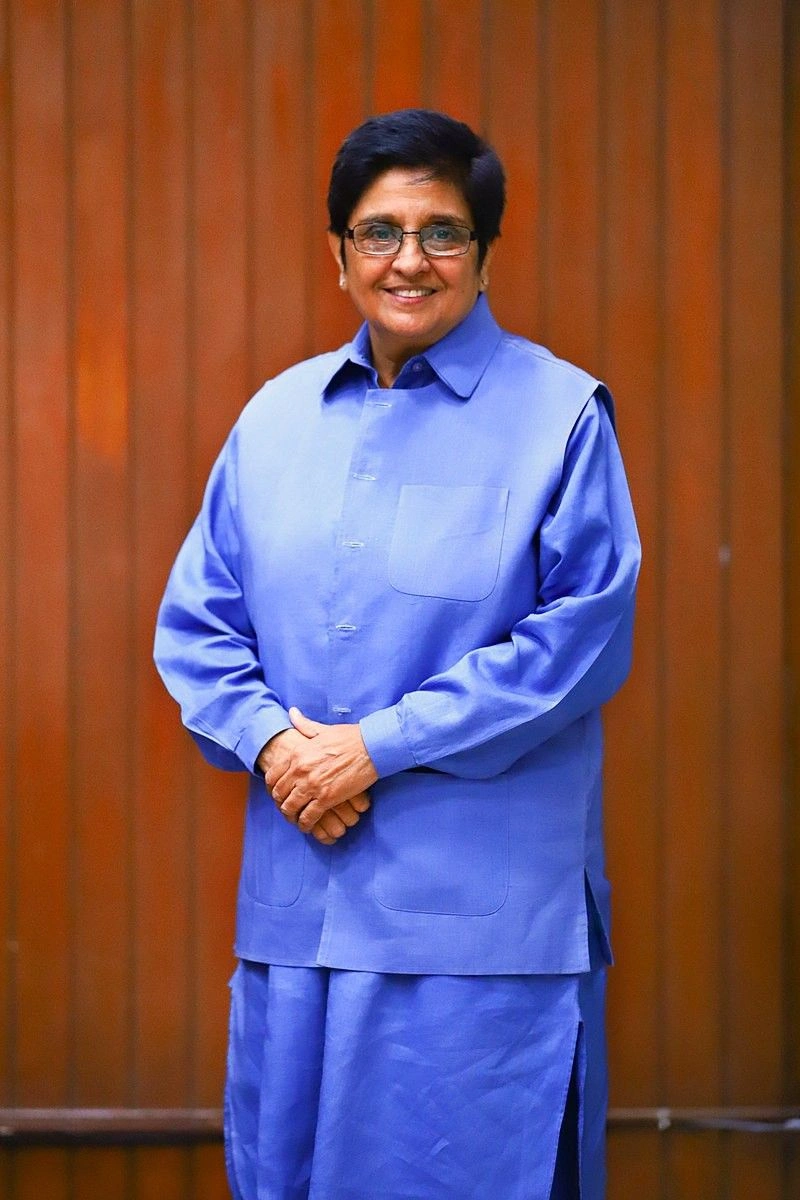
Early Life and Humble Beginnings
Kiran Bedi was born on 9 June 1949 in Amritsar, Punjab, into a Punjabi trading family. Though her grandfather controlled the family’s textile business tightly, her father Prakash Lal Peshawaria broke tradition by insisting all four of his daughters — including Kiran — receive a proper education at Sacred Heart Convent School, even against his own father’s objections about sending girls to a Christian school. This early act of quiet rebellion by her father would set the tone for Kiran Bedi’s entire life: a refusal to accept boundaries simply because “that’s how things are done.”
Educational Struggles and Achievements
In an era when science education for girls was almost unheard of in small-town Punjab, Kiran Bedi’s school did not even offer a science stream — only a subject called “household,” designed to prepare girls for domestic life. She pushed past this limitation, eventually studying English at the graduate level, followed by a master’s in Political Science, and much later, a law degree and a Ph.D. — all while holding one of the most demanding jobs in the country. Her academic journey proves that education, for Kiran Bedi, was never a single destination but a lifelong companion to her career.
UPSC Preparation Journey
Unlike today’s aspirants who follow structured UPSC coaching pathways, Kiran Bedi entered the civil services at a time when the very idea of a woman becoming a police officer seemed implausible to the establishment. Her preparation was less about textbooks and more about the mental toughness she had built on the tennis court and in the National Cadet Corps. When she was selected in 1972, she chose to wear the same uniform and undergo the same training as her 80 male batchmates — a symbolic decision that defined her no-compromise approach to equality.
Key Career Milestones
From her first posting in Chandni Chowk to leading the Republic Day parade contingent, from tackling Delhi’s traffic chaos during the Asian Games to confronting the drug crisis in Mizoram and North Delhi, Kiran Bedi’s career reads as a series of “firsts.” But it was her tenure as Inspector General of Tihar Jail (1993–1995) that cemented her legacy — turning one of Asia’s most notorious prisons into a rehabilitation-focused institution nicknamed “Tihar Ashram.”
Landmark Projects — People’s Governance for Kiran Bedi
As Lieutenant Governor of Puducherry, Kiran Bedi championed several landmark public initiatives, most notably converting the Raj Niwas into an accessible “People’s Niwas,” where citizens could walk in with grievances. She also promoted road safety campaigns, cleanliness drives, and financial-prudence reforms across the union territory — extending the same participatory philosophy she had built during her policing years into full-fledged public administration.
Lessons & Inspiration for Aspirants and Officers
- Discipline built outside the classroom counts. Kiran Bedi’s tennis training and NCC background gave her the resilience that formal exam preparation alone could not.
- Be the first, not because it’s easy, but because someone has to be. Her decision to enter an all-male institution reshaped Indian policing for every woman who came after her.
- Reform, don’t just enforce. Her Tihar Jail model shows that correction and compassion can coexist with discipline.
- Never stop learning. Pursuing a law degree and a Ph.D. mid-career reflects a growth mindset every aspirant should adopt.
- Transparency builds trust. Her “People’s Niwas” model in Puducherry shows how accessibility strengthens public institutions.
Conclusion: Legacy and Future Vision
Kiran Bedi’s legacy is not confined to being “the first woman IPS officer” — though that alone would have secured her place in history. Her legacy lies in proving that public service can be both firm and humane, that institutions can be reformed from within, and that one person’s persistence can permanently widen the door for millions of others. As she continues her work through mentorship and foundations in 2026, the story of Kiran Bedi remains an active, living inspiration — not a closed chapter — for every UPSC aspirant, police officer, and citizen who believes, as she does, that “It’s Always Possible
Read More:
- Officer Profile
- Aditya Srivastava UPSC
- Anshika Verma IPS
- Tanu Jain
- Major Rishabh Singh Sambyal
- Smita Sabharwal IAS
- Shakti Dubey UPSC Topper
- Tina Dabi
- Srushti Jayant Deshmukh
Frequently Asked Questions
Who is Kiran Bedi?
Kiran Bedi is India’s first woman officer in the Indian Police Service (IPS), a social activist, author, and the former Lieutenant Governor of Puducherry (2016–2021).
What is Kiran Bedi’s current position?
As of 2026, Kiran Bedi is retired from government service. She runs the Navjyoti India Foundation, India Vision Foundation, and Kiran Bedi Leadership Learnings (KBLL), and remains active as a public speaker and author.
Is Kiran Bedi married?
Kiran Bedi married Brij Bedi, a fellow tennis player, in 1972. The couple lived separately for most of their marriage but never divorced. Brij Bedi passed away in January 2016.
Who is Kiran Bedi’s husband?
Her husband was Brij Bedi, a textile engineer and social activist from Amritsar.
Does Kiran Bedi have children?
Yes, she has one daughter, Saina Bedi (Bharucha), born in 1975, and a granddaughter named Meher.
What is Kiran Bedi’s UPSC rank / how did she join the IPS?
Kiran Bedi joined the Indian Police Service in 1972 as its first-ever woman officer, selected through the civil services examination process of that era, which predates the modern UPSC exam structure familiar to today’s aspirants.
Has Kiran Bedi passed away? What is her “died date”?
No — as of this writing in 2026, Kiran Bedi is alive and remains publicly active. Reports or search queries suggesting a “Kiran Bedi died date” are incorrect; it is her late husband, Brij Bedi, who passed away in January 2016.
What is Kiran Bedi famous for?
She is best known for reforming Tihar Jail into a rehabilitation-focused institution, winning the Ramon Magsaysay Award in 1994, and later serving as the first woman Lieutenant Governor of Puducherry.
Did Kiran Bedi work on Delhi’s air pollution or traffic issues?
Kiran Bedi is widely remembered for her pioneering work in Delhi traffic management during the 1980s, including the introduction of community “beat box” policing; her broader public administration work has also touched on civic and environmental governance during her tenure in public office.
Is there an actor who played Kiran Bedi in films?
Yes, a biopic titled Yes Madam, Sir, made by an Australian filmmaker, chronicles her life and career.
For more verified information, you can refer to this trusted external source: Founderdetail.com
