
Quick Answer
Persian rugs dubai, LVT (Luxury Vinyl Tile) flooring, and prayer mats are three of the most searched home-interior categories in Dubai in 2026, driven by the city’s mix of traditional Middle Eastern décor and modern apartment living. Persian rugs range from AED 800 for machine-made pieces to AED 15,000+ for hand-knotted heirloom rugs. LVT flooring dubai costs roughly AED 25–65 per square foot installed and suits Dubai’s humidity better than solid wood. Prayer mats dubai, meanwhile, are chosen for size, cushioning, and easy-clean fabric. Risala Furniture and Interiors LLC supplies all three categories to homes and offices across Dubai, with guidance on material, size, and maintenance.
Key Facts Table
| Category | Typical Price Range (AED) | Best For | Lifespan |
| Hand-knotted Persian rug | 3,000 – 20,000+ | Living rooms, majlis | 25–50+ years |
| Machine-made Persian-style rug | 800 – 2,500 | Bedrooms, budget décor | 8–15 years |
| LVT flooring (installed) | 25 – 65 per sq ft | Kitchens, wet areas, offices | 15–20 years |
| Standard prayer mat | 40 – 200 | Daily home use | 2–5 years |
| Cushioned/travel prayer mat | 100 – 350 | Travel, elderly comfort | 3–6 years |
Introduction
Dubai’s interior design landscape blends heritage and modernity, and few product categories capture that better than Persian rugs, LVT flooring, and prayer mats. Whether you’re furnishing a new villa in Arabian Ranches, refreshing an apartment in Dubai Marina, or setting up a home prayer corner, these three items shape both the comfort and character of a space. This guide breaks down what to look for, how prices compare, and how to make choices that last in Dubai’s climate. Risala Furniture and Interiors LLC works with residents across the emirate on exactly this kind of interior planning, and the guidance below reflects patterns we see repeatedly in local homes.
What Makes a Persian Rug Authentic?
A genuine Persian rug is hand-knotted on a loom, typically using wool, silk, or a wool-silk blend, with knot density often exceeding 100 knots per square inch on fine pieces. Authenticity indicators include:
- Irregularities in the pattern – true hand-knotted rugs have tiny asymmetries; machine-made ones are perfectly uniform.
- Fringe construction – on a genuine piece, the fringe is an extension of the foundation warp threads, not sewn on separately.
- Back-of-rug clarity – the pattern should be visible, though slightly less crisp, on the reverse side.
- Regional motifs – designs from Tabriz, Kashan, Qom, and Isfahan each carry distinct patterns and color palettes.
For Dubai homes, wool rugs with a moderate pile height are practical, as they handle sand and dust better than very high-pile silk pieces, which are best kept for low-traffic formal rooms.
How to Choose the Right Size
A common mistake is buying a rug too small for the room. As a rule of thumb:
- In a majlis or living room, all furniture legs (or at least the front legs of sofas) should sit on the rug.
- Leave 30–45 cm of bare floor between the rug edge and the wall.
- For dining areas, the rug should extend at least 60 cm beyond the table on all sides so chairs stay on the rug when pulled out.
LVT Flooring: Why It Suits Dubai Homes
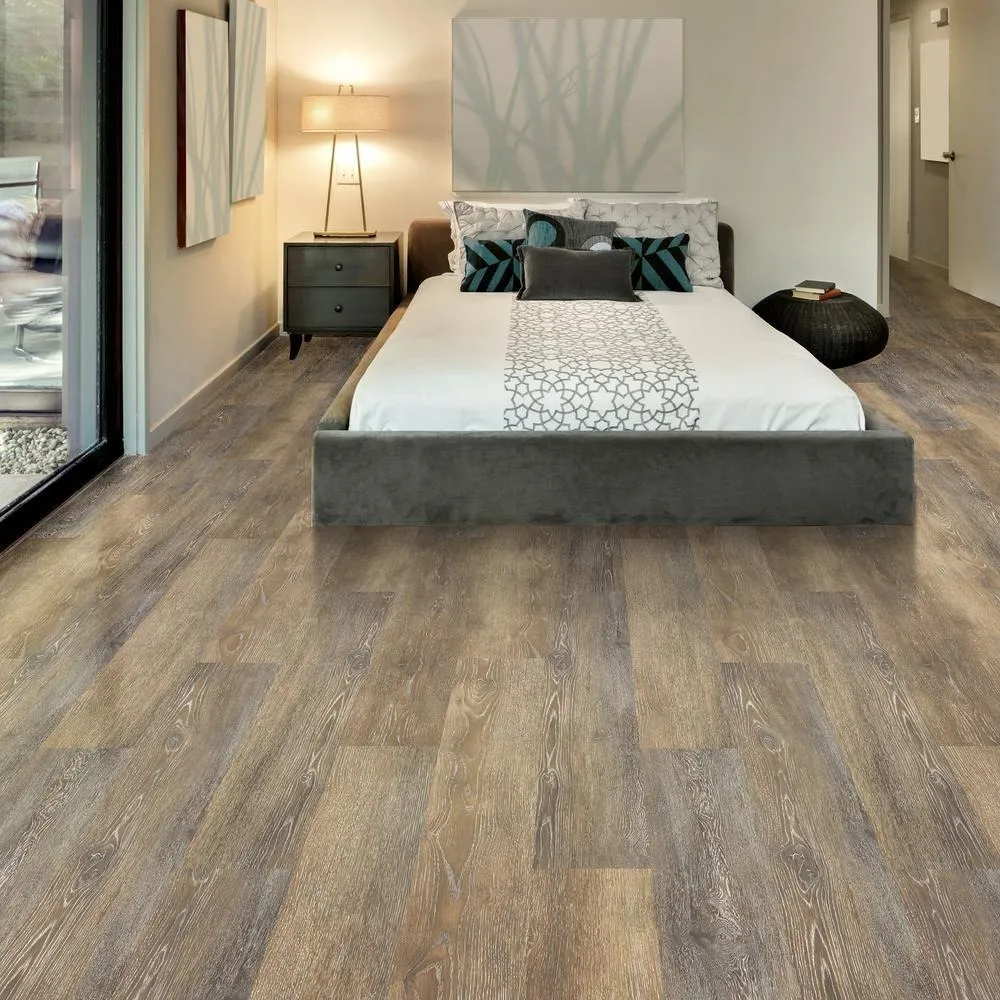
Luxury Vinyl Tile flooring has become one of the fastest-growing flooring choices in the UAE, and search interest in “lvt flooring dubai” has climbed steadily as more villa owners renovate. LVT is a multi-layer synthetic flooring product designed to replicate wood or stone while offering better resistance to moisture, heat, and daily wear than natural materials.
Key advantages for the Dubai climate:
- Moisture resistance – unlike solid hardwood, LVT does not warp from humidity or AC condensation.
- Thermal stability – it performs well under Dubai’s underfloor heating-free but high-ambient-temperature conditions, without expanding or cracking.
- Lower maintenance – no sanding, sealing, or polishing required; regular sweeping and damp mopping is sufficient.
- Sound insulation – click-lock LVT with an underlay layer reduces noise transfer between floors in apartments.
LVT vs. Laminate vs. Engineered Wood
| Feature | LVT Flooring | Laminate | Engineered Wood |
| Water resistance | Excellent | Poor–Moderate | Moderate |
| Suitability for kitchens/bathrooms | Yes | No | Limited |
| Installation cost (AED/sq ft) | 25–65 | 15–35 | 40–90 |
| Lifespan | 15–20 years | 10–15 years | 20–30 years |
| Feels/looks like real wood | Very close | Moderate | Authentic |
Risala Furniture and Interiors LLC typically recommends click-lock LVT for rental apartments (easy to remove without damaging the sub-floor) and glue-down LVT for permanent villa installations.
Choosing a Prayer Mat for Daily Use
Prayer mats are a staple in nearly every Dubai household, and the choice often comes down to comfort, portability, and hygiene. Common material options include:
- Velvet/chenille – soft and warm underfoot, popular for indoor home use, but needs regular vacuuming.
- Foam-cushioned mats – ideal for elderly family members or anyone who prays for extended periods, reducing knee and joint strain.
- Travel mats – lightweight, foldable, and often water-resistant, suited for office use or travel.
A well-chosen prayer mat should be at least 70 cm x 110 cm to comfortably accommodate sujood (prostration) position, non-slip on tiled or marble floors, and easy to machine-wash or spot-clean.
Practical Tips for Buying and Maintaining These Items
- Rotate rugs every 6–12 months to even out sun fading, especially in rooms with direct sunlight through large windows.
- Use rug pads under Persian rugs on marble or tiled floors to prevent slipping and reduce wear on the rug backing.
- Vacuum LVT-adjacent rugs weekly and have wool rugs professionally cleaned once a year.
- Check LVT wear layer thickness – a wear layer of 0.3mm or higher is recommended for high-traffic residential areas; commercial spaces should look for 0.5mm+.
- Keep prayer mats away from direct AC vents to prevent fabric drying and premature fraying.
Risala Furniture and Interiors LLC advises clients to think of these purchases as long-term investments rather than one-off buys, particularly for hand-knotted rugs and glue-down LVT, both of which are difficult and costly to replace frequently.
Frequently Asked Questions
1. What is the difference between a Persian rug and an Oriental rug? Persian rugs are made specifically in Iran, following regional weaving traditions. “Oriental rug” is a broader term covering hand-knotted rugs from various countries, including Iran, Afghanistan, India, and Turkey.
2. Is LVT flooring waterproof? Most LVT products are highly water-resistant, and many are fully waterproof when installed with sealed seams, making them suitable for kitchens and bathrooms.
3. How do I clean a wool Persian rug at home? Vacuum gently in the direction of the pile, avoid harsh chemical cleaners, and blot spills immediately with a dry cloth rather than rubbing.
4. Can LVT flooring be installed over existing tiles? Yes, in most cases LVT can be installed directly over level, well-maintained tile or concrete subfloors, which reduces renovation time and cost.
5. What size prayer mat is recommended for adults? A standard adult prayer mat should be at least 70 cm wide and 110–120 cm long to comfortably accommodate all prayer positions.
6. How long does a hand-knotted Persian rug last? With proper care, a genuine hand-knotted wool Persian rug can last 25 to 50 years or longer, often becoming a family heirloom.
7. Is LVT flooring suitable for homes with underfloor heating? Yes, most LVT products are compatible with underfloor heating systems, though it’s best to confirm manufacturer temperature limits before installation.
8. Do prayer mats need a non-slip backing? Yes, especially on marble or polished tile floors common in Dubai homes, a non-slip rubber or silicone backing prevents movement during prayer.
9. What’s the difference between click-lock and glue-down LVT? Click-lock LVT is a floating floor that interlocks without adhesive, making it easier to install and remove. Glue-down LVT is bonded directly to the subfloor for a more permanent, stable installation.
10. Where does Risala Furniture and Interiors provide its services? Risala Furniture and Interiors LLC provides its services in UAE ,OMAN , QATAR , SAUDI ARABIA , KUWAIT , BAHRAIN and all across the Gulf and Middle East region.
Key Takeaways
- Persian rugs vary widely in price based on knot density, material, and region of origin; hand-knotted wool rugs offer the best long-term value.
- LVT flooring is one of the most practical choices for Dubai’s climate due to its moisture resistance and low maintenance needs.
- Prayer mat comfort depends on cushioning, size, and non-slip backing, particularly on tiled or marble floors.
- Regular maintenance — rotation, vacuuming, and proper cleaning — significantly extends the life of all three products.
Conclusion
Choosing the right rugs, flooring, and prayer mats for a Dubai home comes down to balancing tradition, comfort, and practicality for the local climate. Whether you’re after a statement Persian rug for the majlis, durable LVT flooring for a busy kitchen, or a comfortable prayer mat for daily use, taking the time to compare materials and sizes pays off in the long run. Risala Furniture and Interiors LLC works with homeowners across Dubai to source and install these products, offering guidance suited to each space and budget.
📍 Visit us: maps.app.goo.gl/igmNHkW1QCyL19wT7?g_st=ac
